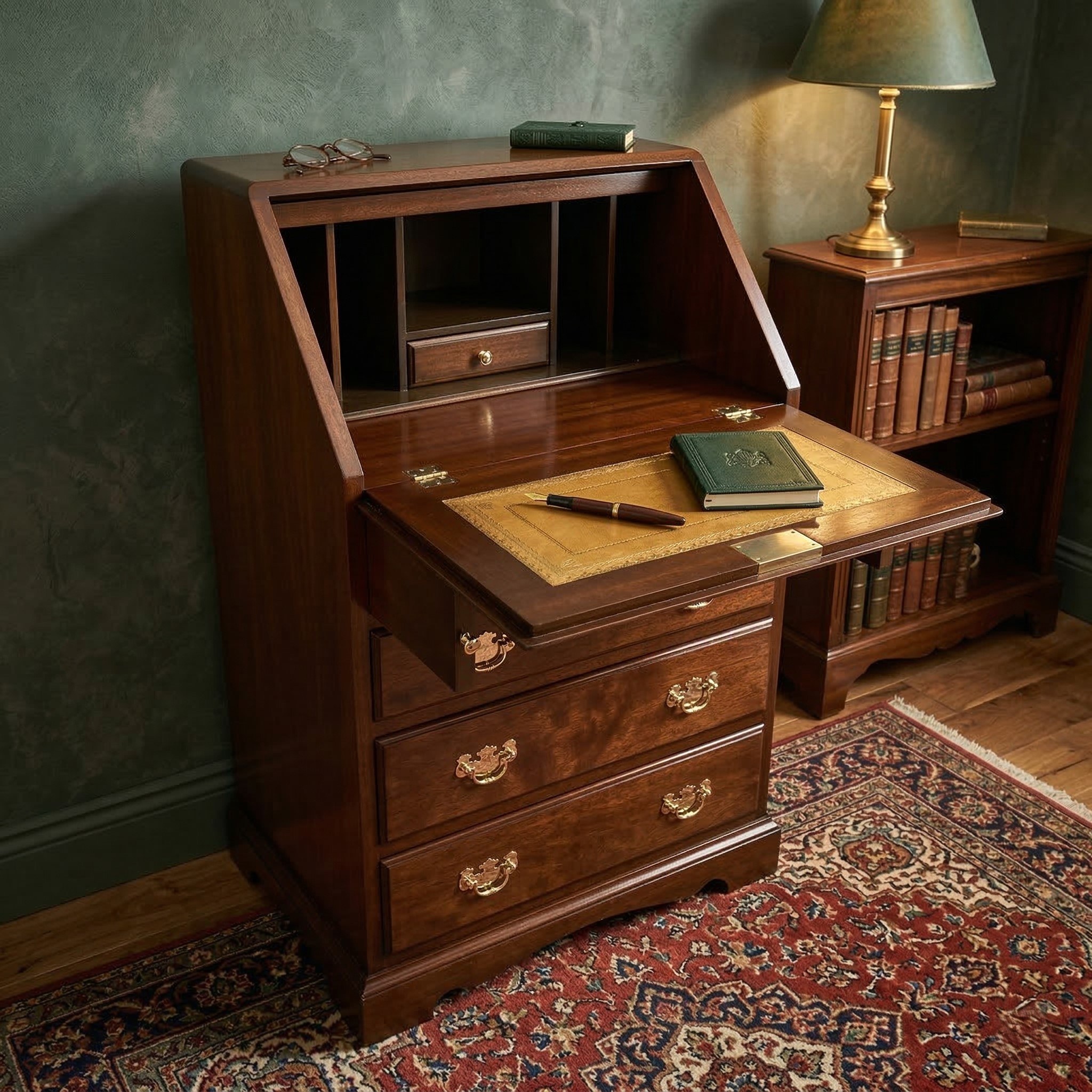
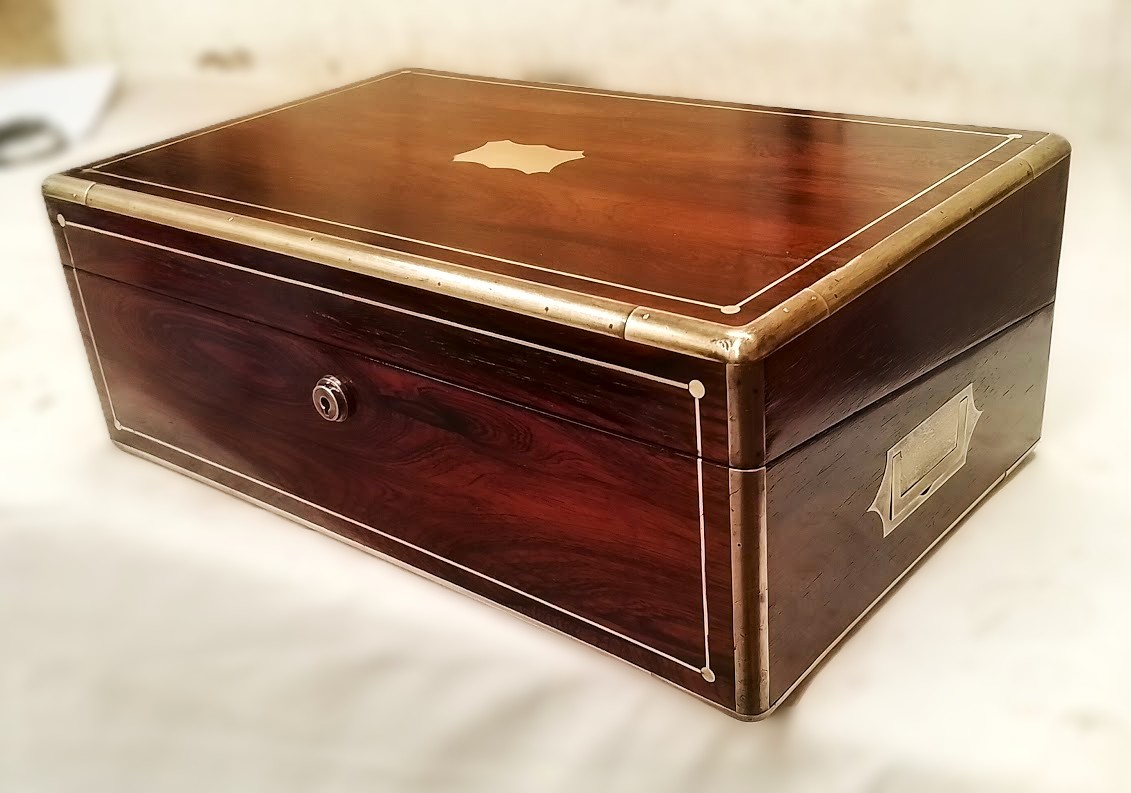
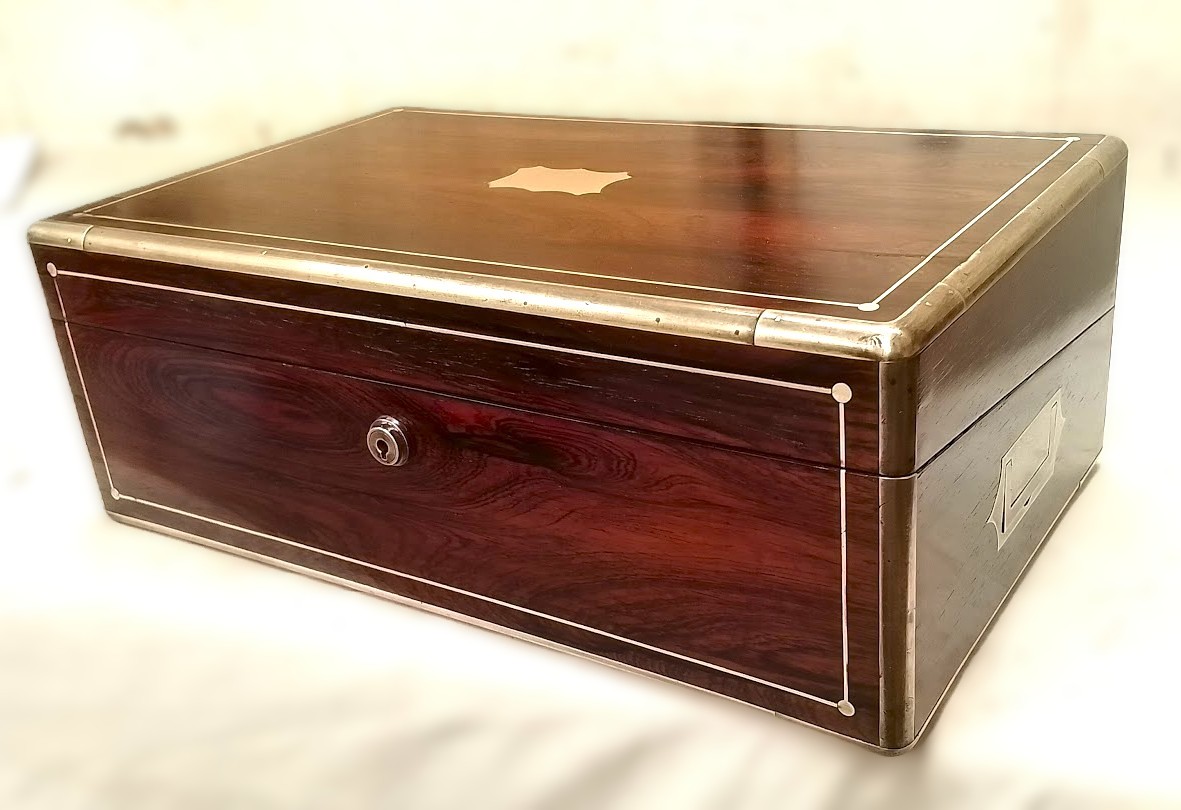
This nineteenth‑century rosewood writing slope arrived with its structure intact and its interior beautifully preserved. The original ink bottles and leatherwork had survived, but several areas of brass stringing and inlay were missing. The shellac finish had also deteriorated, dulling the natural depth of the rosewood.
A writing slope was the portable laptop of its day, a compact desk where letters, notes and documents were penned with ink. Restoring this piece meant honouring both its function and its craftsmanship.
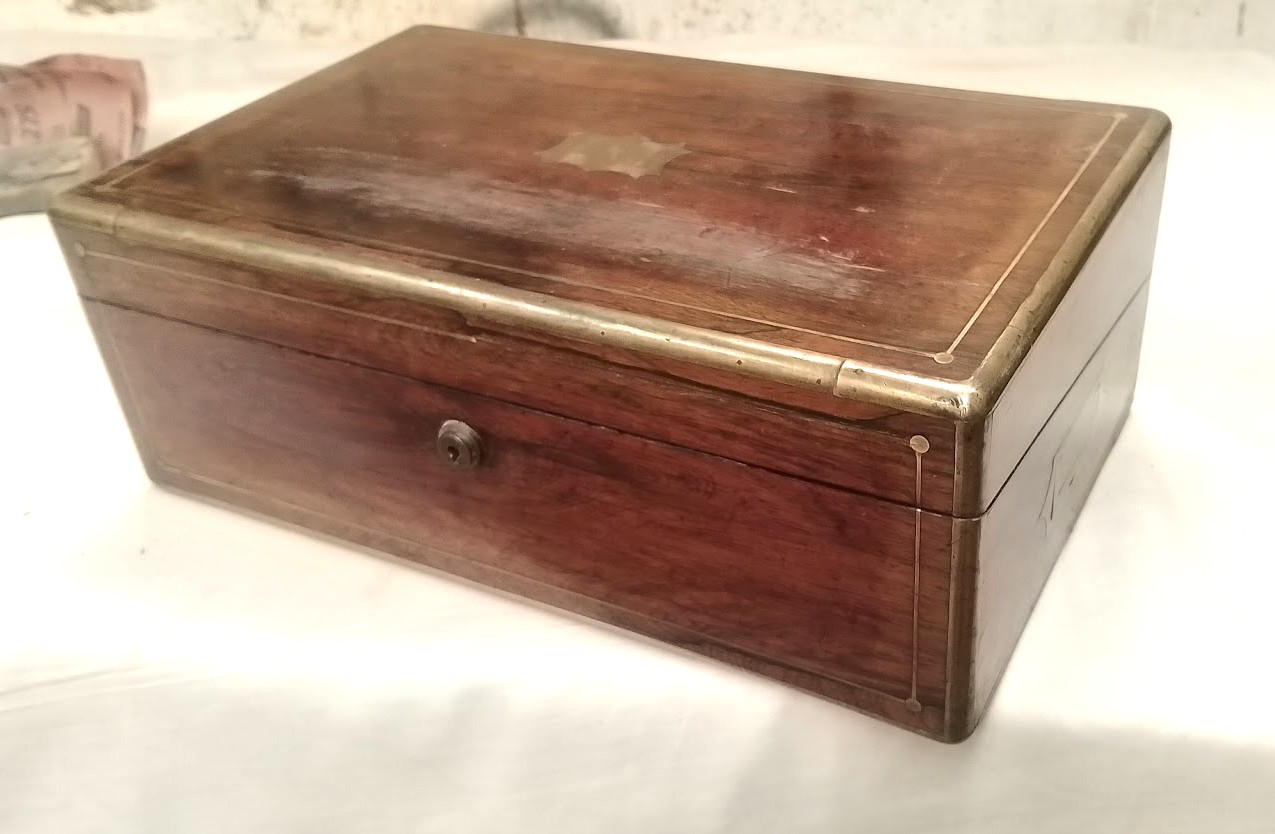
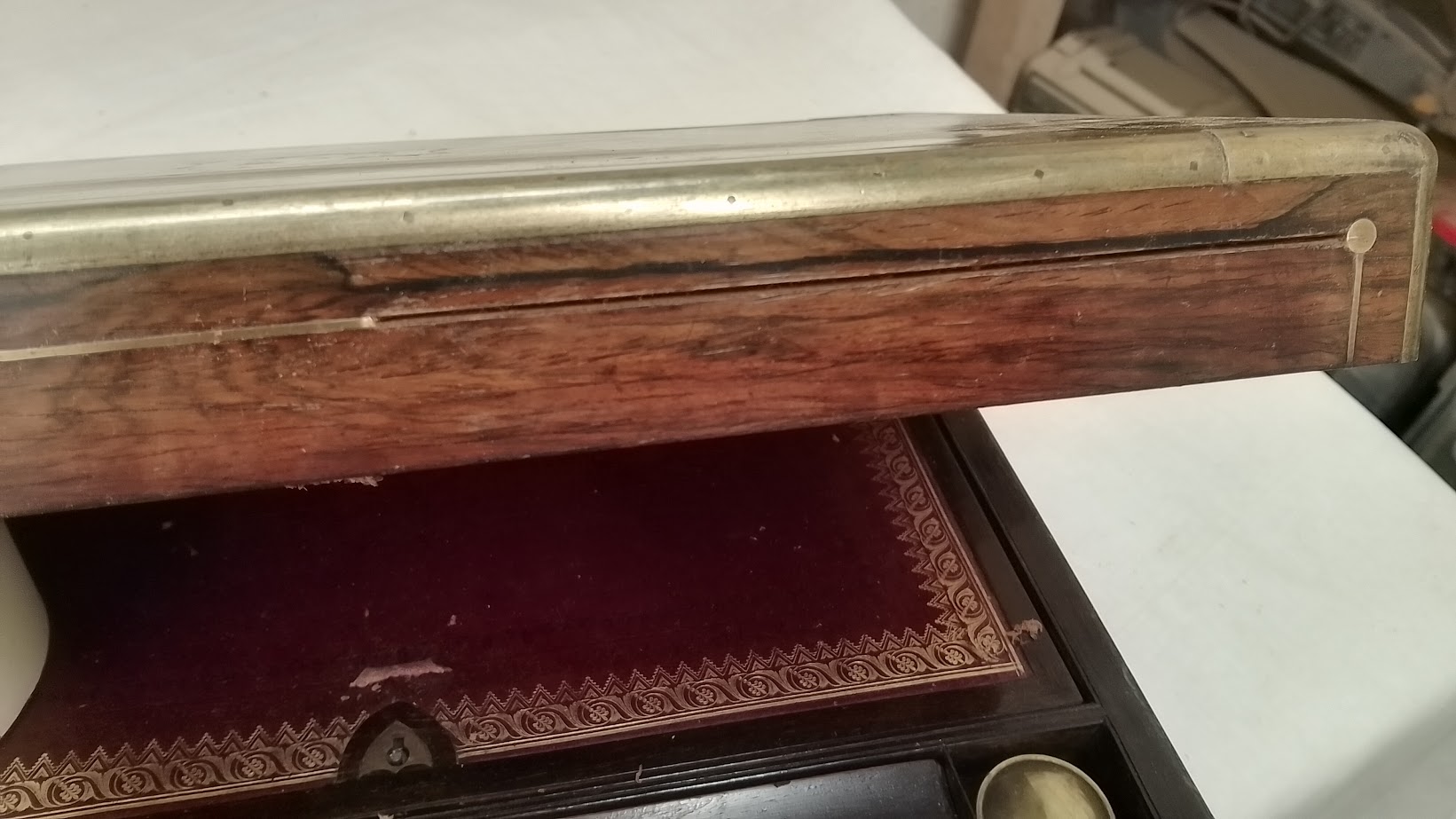
Restoring the brass inlays
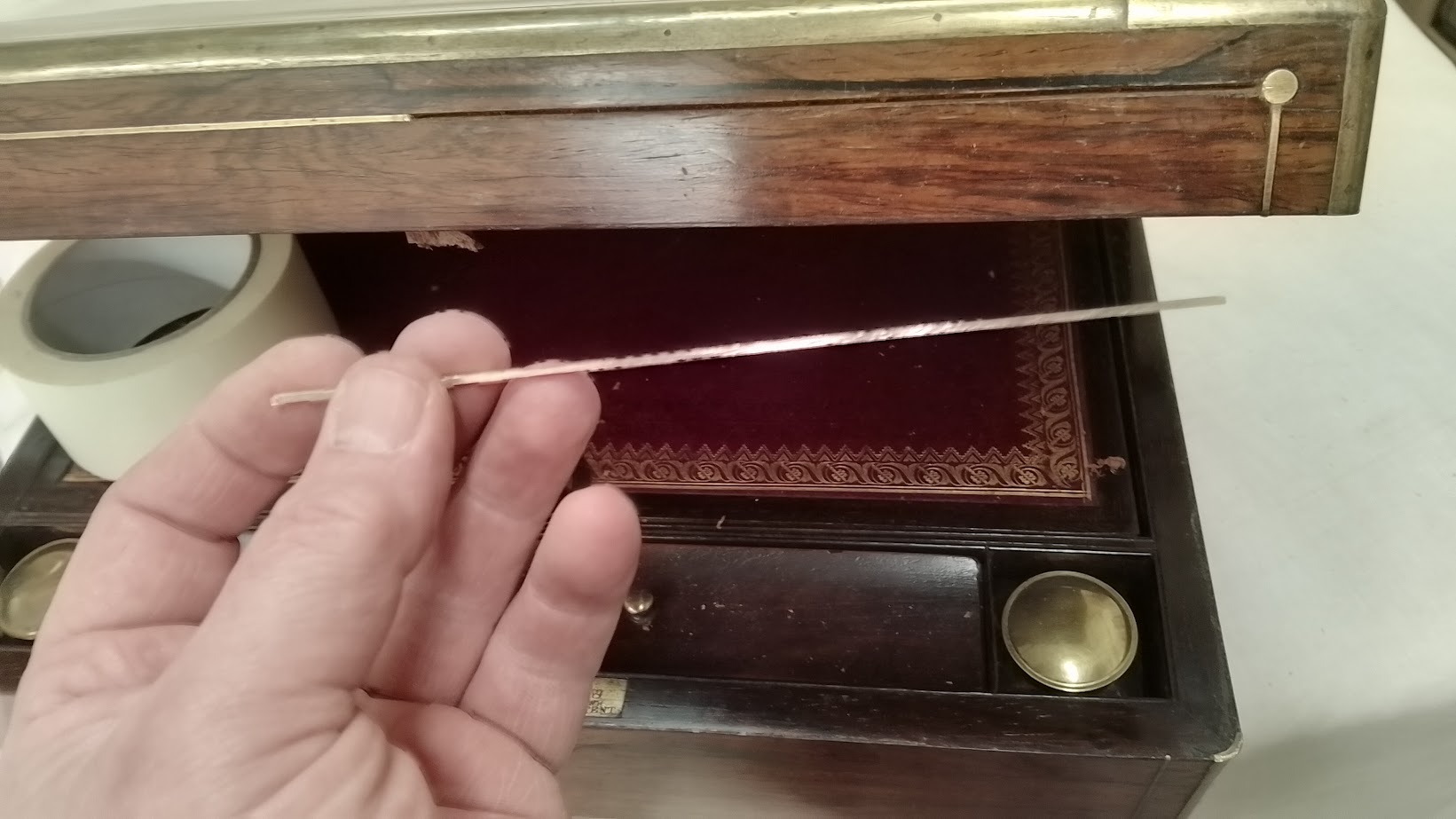
The first step was to create entirely new lengths of brass stringing and decorative inlay, each one cut, filed and shaped by hand to mirror the curves and proportions of the original nineteenth‑century detailing. This process takes time, as every line of brass must sit perfectly within its channel, neither proud nor recessed.
Once each piece had been refined, the new brasswork was gently eased into its freshly prepared grooves, checked for alignment, then bonded securely with epoxy. The aim is always for the replacement sections to blend so naturally with the surrounding rosewood that they feel like part of the piece’s history rather than a modern intervention. With the new inlays settled, the surrounding areas were inspected again, making sure the timber and brass would take the later stages of restoration evenly and harmoniously.
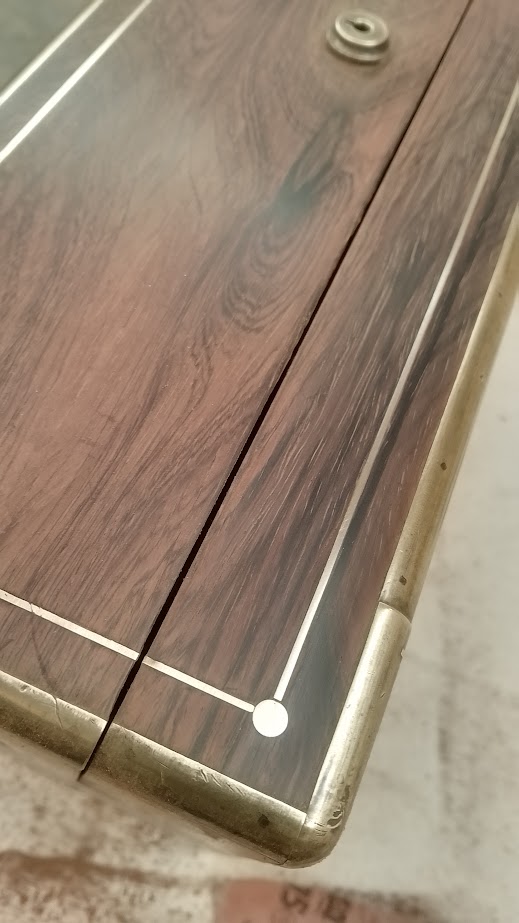
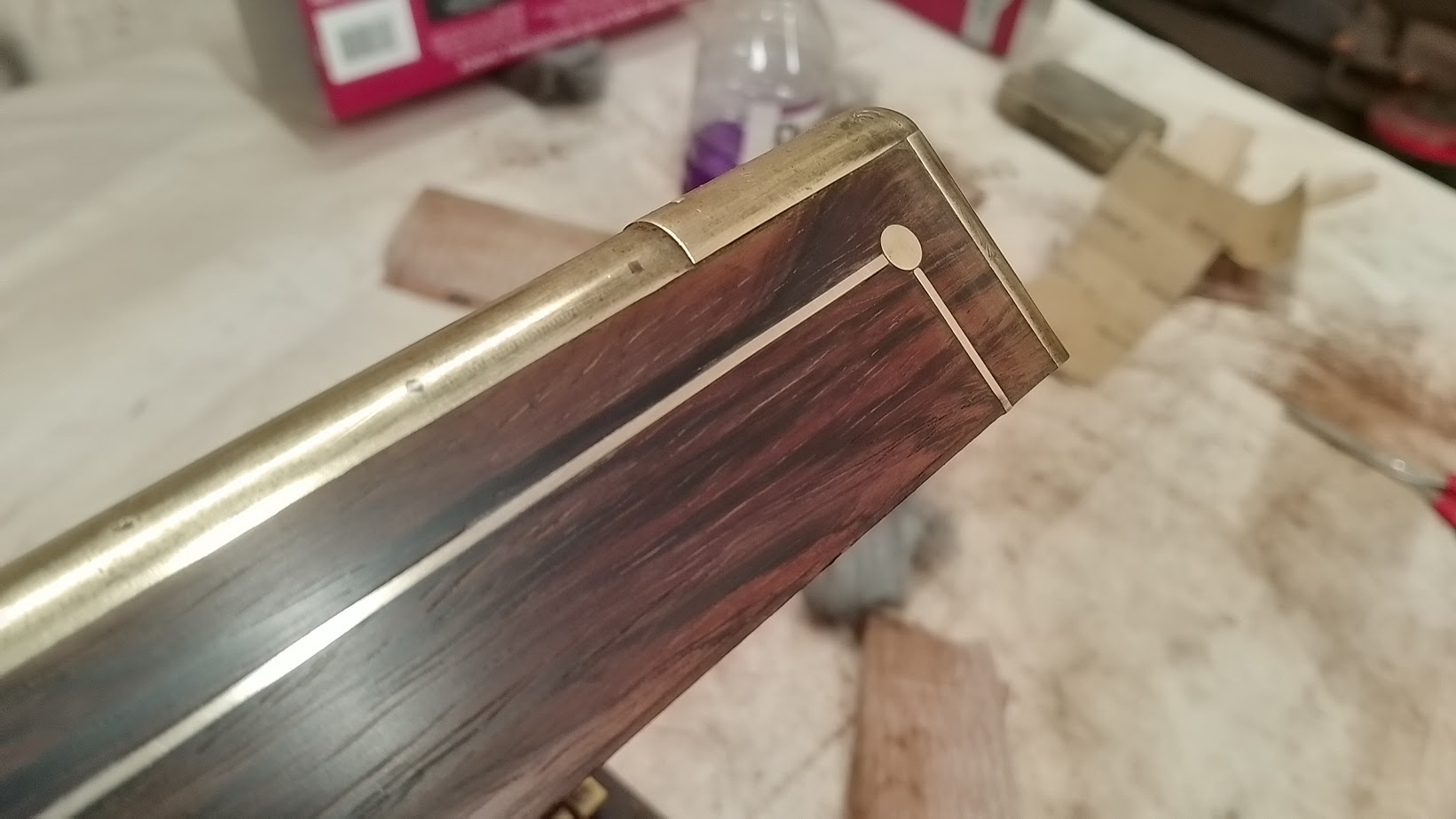
Preparing the timber
Once the new brass details were secured and sitting cleanly within their channels, work moved on to the surface as a whole. The original shellac, worn thin in some places and muddied in others, was carefully removed to reveal the bare rosewood beneath. This is always a delicate stage: enough of the old finish must be lifted to create a clean foundation, yet the natural character of the timber must remain untouched. As the layers came away, the grain began to reappear—deep, lively and full of the movement characteristic of quality rosewood.
The existing brassware, dulled by age and handling, was then gently cleaned and brought back to a soft glow, ensuring that every metal detail would complement the renewed finish rather than compete with it. With the timber fully prepared and every surface levelled and refined, the writing slope was finally ready for French polishing.
Using traditional methods, thin layers of shellac were applied and built up slowly, each one adding subtle depth and clarity to the wood. As the polish developed, the rosewood transformed, gaining warmth, richness and a beautifully soft lustre. By the end of the process, the writing slope once again displayed the elegance and craftsmanship it was known for—its grain glowing and its details united in a refined, timeless finish.
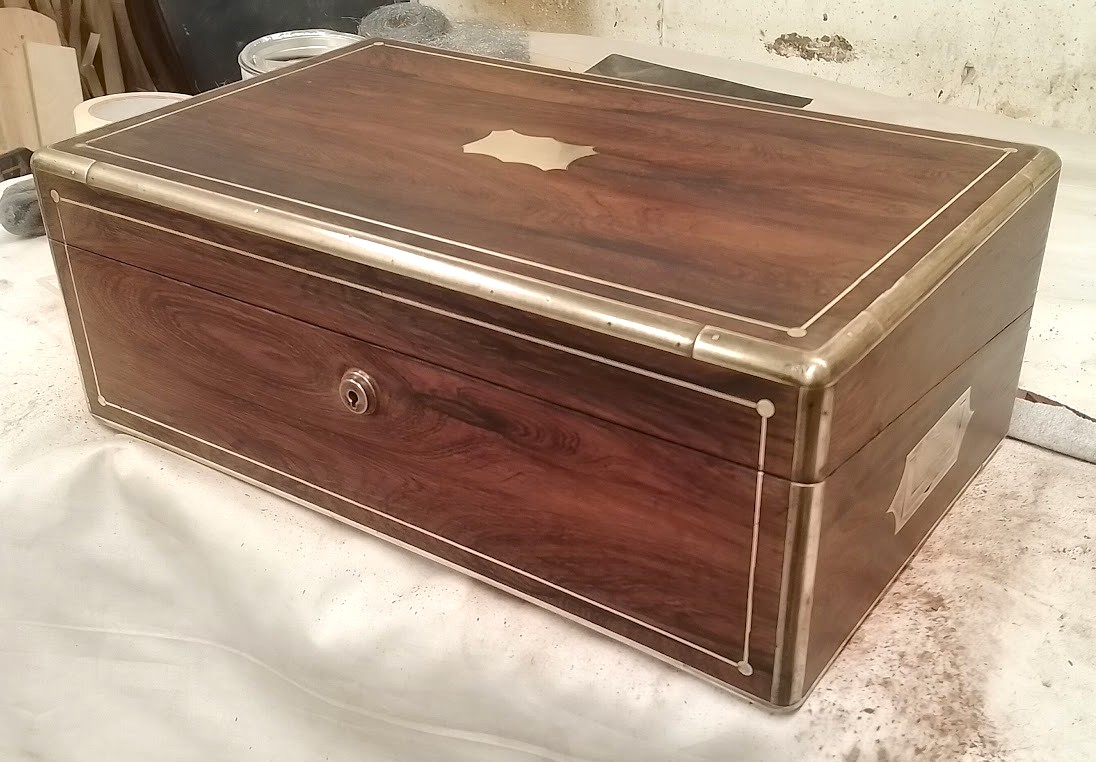
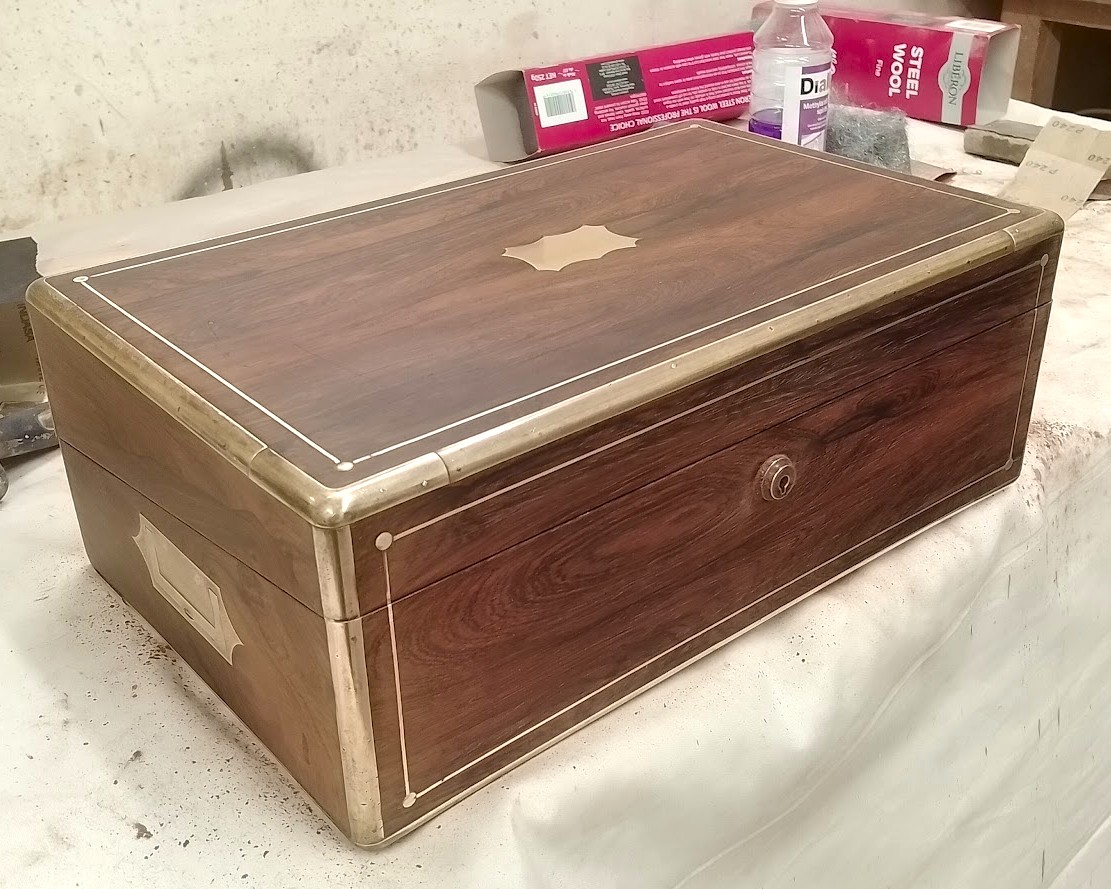
Ready to return home
With its finish renewed, its brasswork refined and its original character carefully preserved, this charming writing slope has regained the quiet elegance it once carried so effortlessly. Restored with respect for its history and an eye for detail, it now feels ready to be enjoyed again—whether displayed as a treasured heirloom or used as it was intended, a small and beautifully crafted workspace returning home to its owner.
Be sure to explore our work on our Facebook and Instagram pages, and don’t forget to follow us for updates, new projects, and more examples of our craftsmanship and restorations.