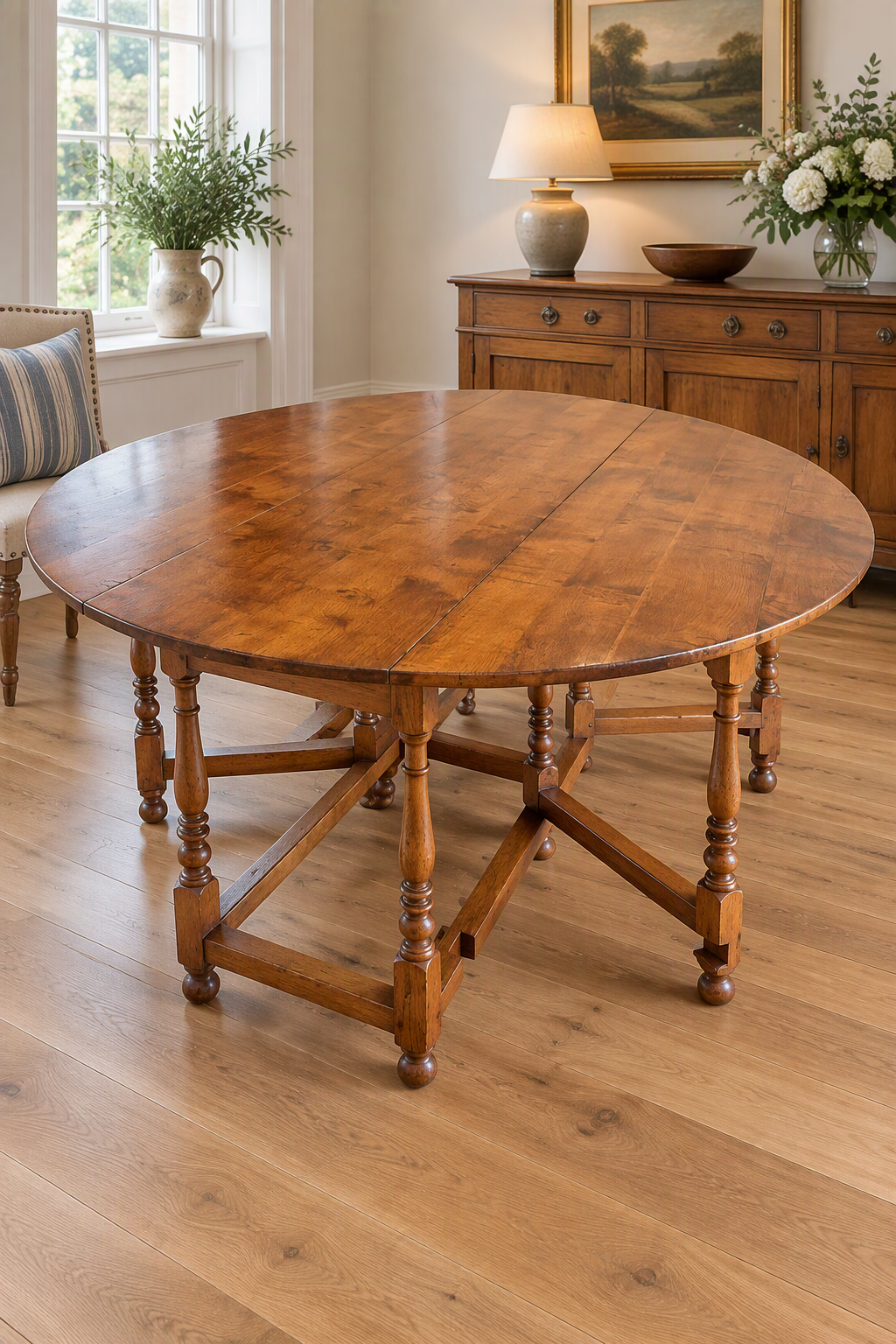
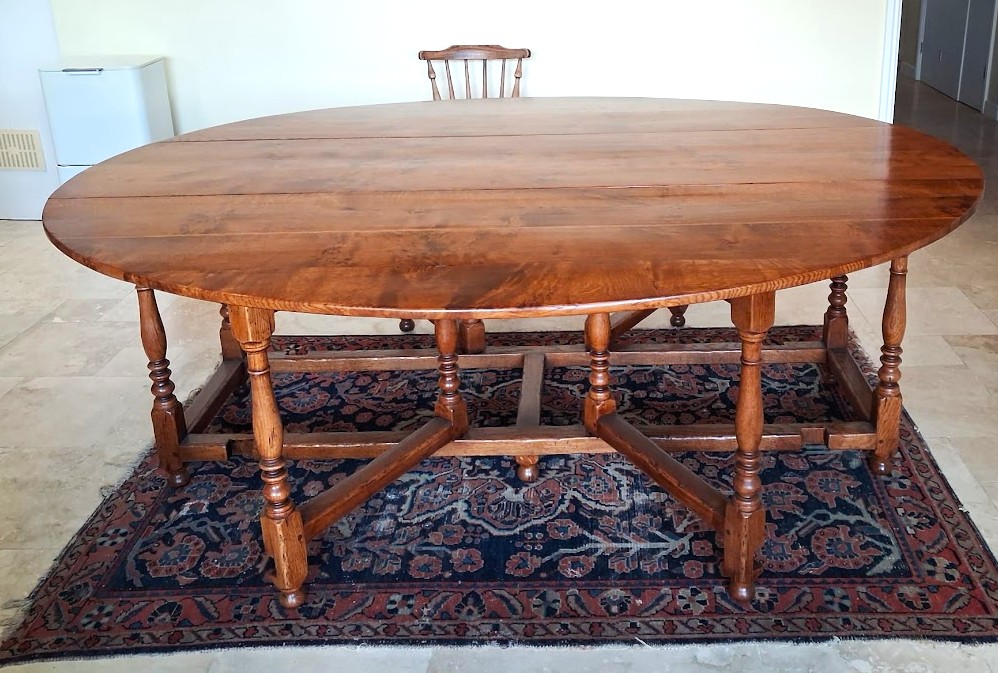
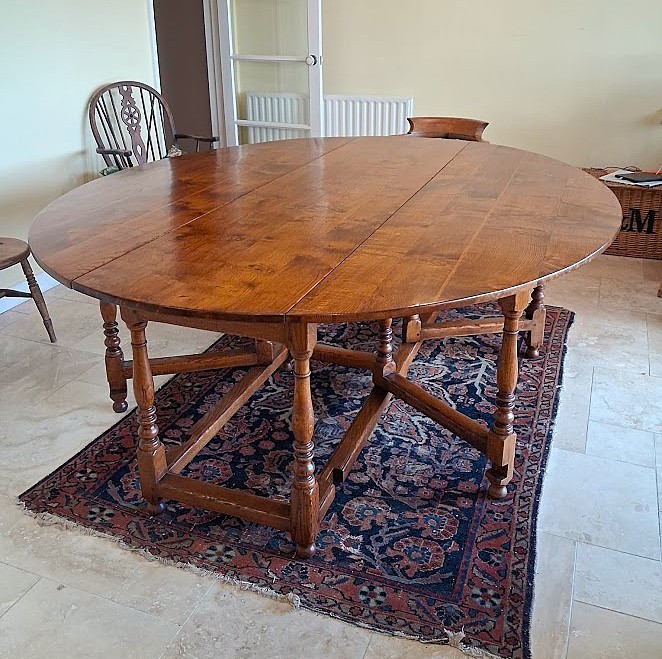
This exceptionally large late 18th-century gate-leg table is believed to have originated in Ireland. Traditionally known as a ‘wake table’, this distinctive type of furniture has an interesting history and was designed to serve several purposes.
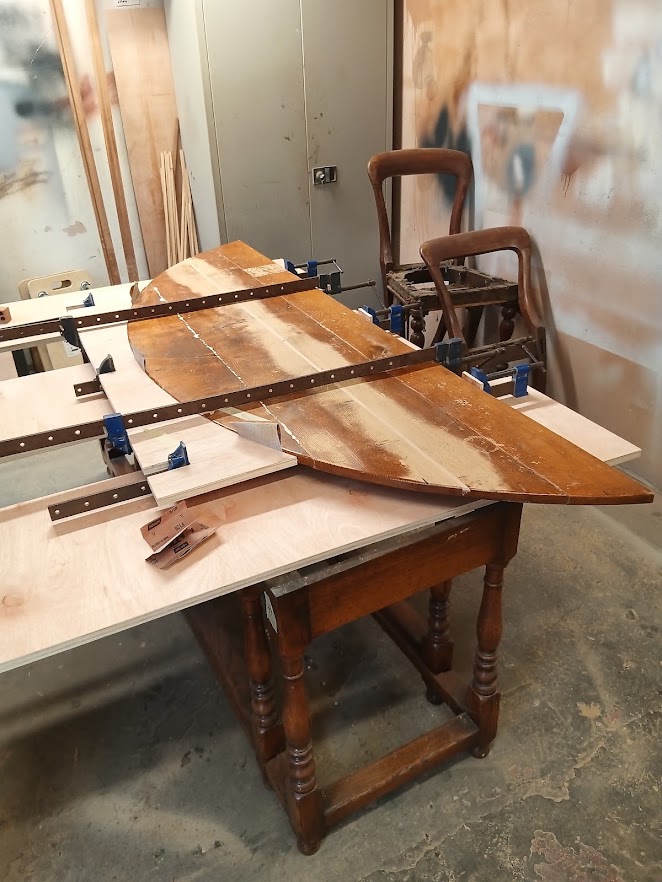
When the table arrived at our workshop, it was in need of considerable restoration. The finish was worn and damaged, while the individual boards of the tabletop had become badly skewed, resulting in gaps between them and an uneven surface.
The restoration
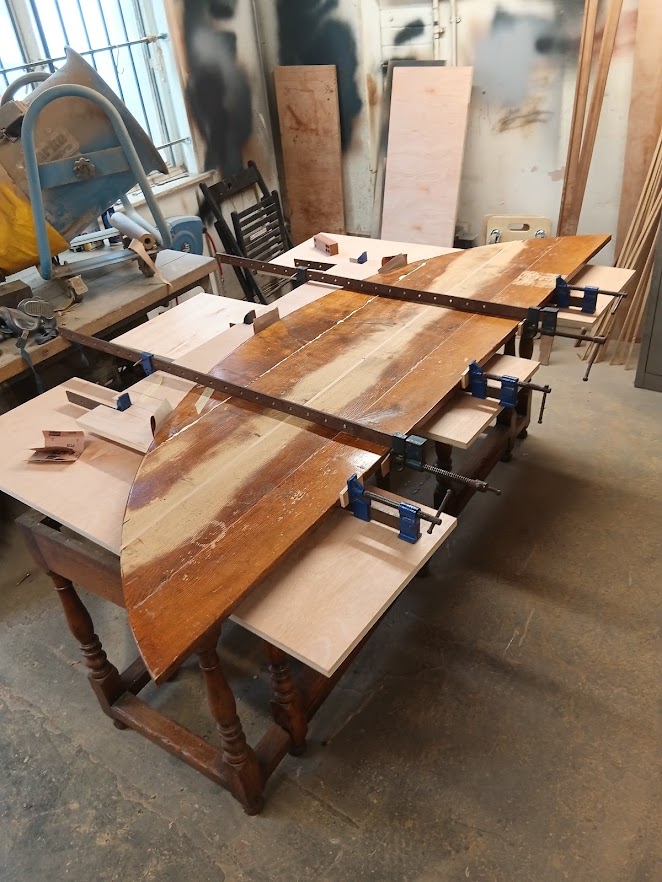
The restoration required much more than simply stripping and refinishing the table. To address the structural problems properly, we had to dismantle every board of the tabletop.
The edges of each board were carefully planed straight before new tongue-and-groove joints were cut to ensure a tight, secure fit. This allowed the boards to be reassembled correctly, creating a strong, tightly joined and perfectly flat tabletop.
Once the structural repairs were complete, the old, damaged finish was stripped and the timber refinished, bringing the table back to life while retaining its character as an important piece of antique furniture.
A little history: the Irish wake table
Irish wake tables are distinctive pieces of 18th- and 19th-century furniture, traditionally made with a long, narrow central section and hinged drop leaves supported by swinging gate-legs. Their design allowed them to serve several purposes, extending into a large dining or gathering table when required and folding away neatly when not in use.
The name ‘wake table’ comes from an Irish funeral tradition. During a wake, when family and friends gathered to pay their respects and keep watch over the deceased before burial, the table could be used as a platform for the coffin. With the leaves folded down, the central section provided a suitably sized surface.
These tables are also sometimes referred to as ‘hunt tables’, reflecting their use at hunting gatherings, where their generous surface provided a convenient place for serving food and refreshments.
Today, surviving examples are appreciated not only for their ingenious gate-leg construction and practicality, but also for their connection to Irish domestic life and social history.
Also, explore our work on Facebook and Instagram for our latest updates and projects, and visit our Pinterest page for inspiration, ideas, and a closer look at our craftsmanship and restorations.