

Initial condition and assessment
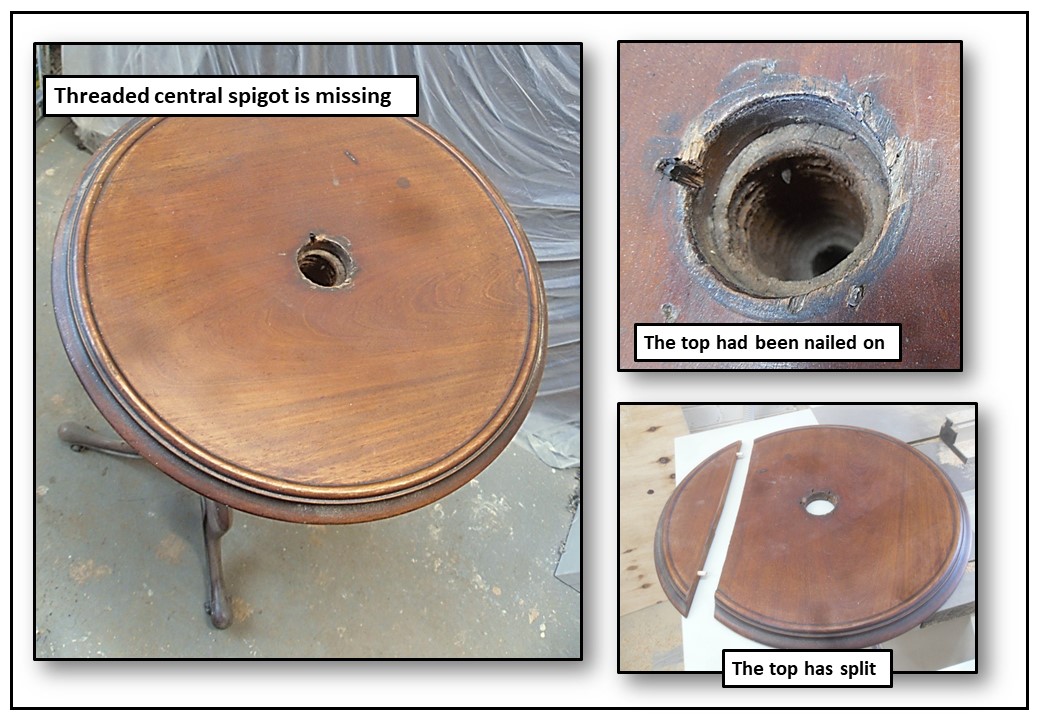
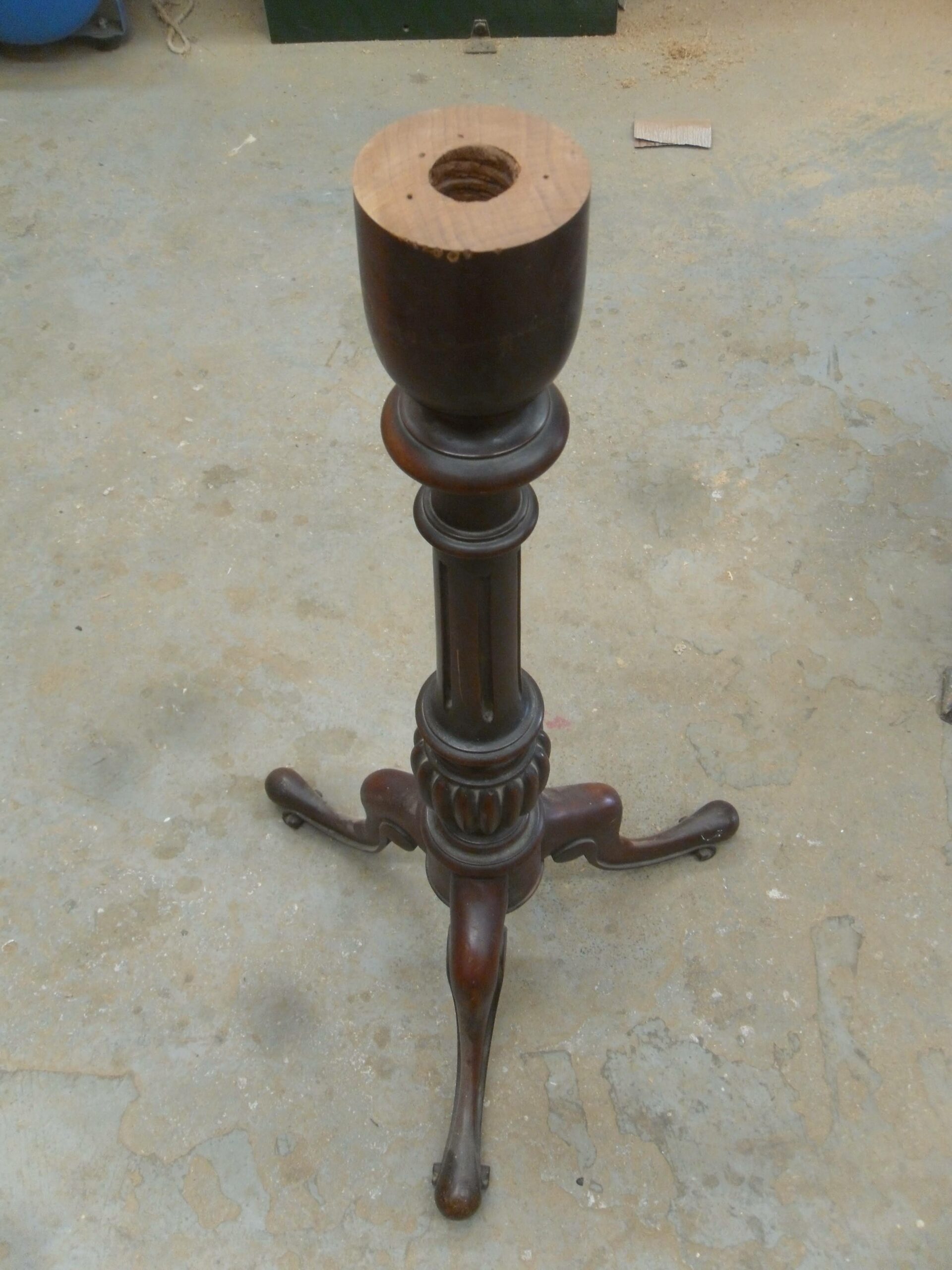
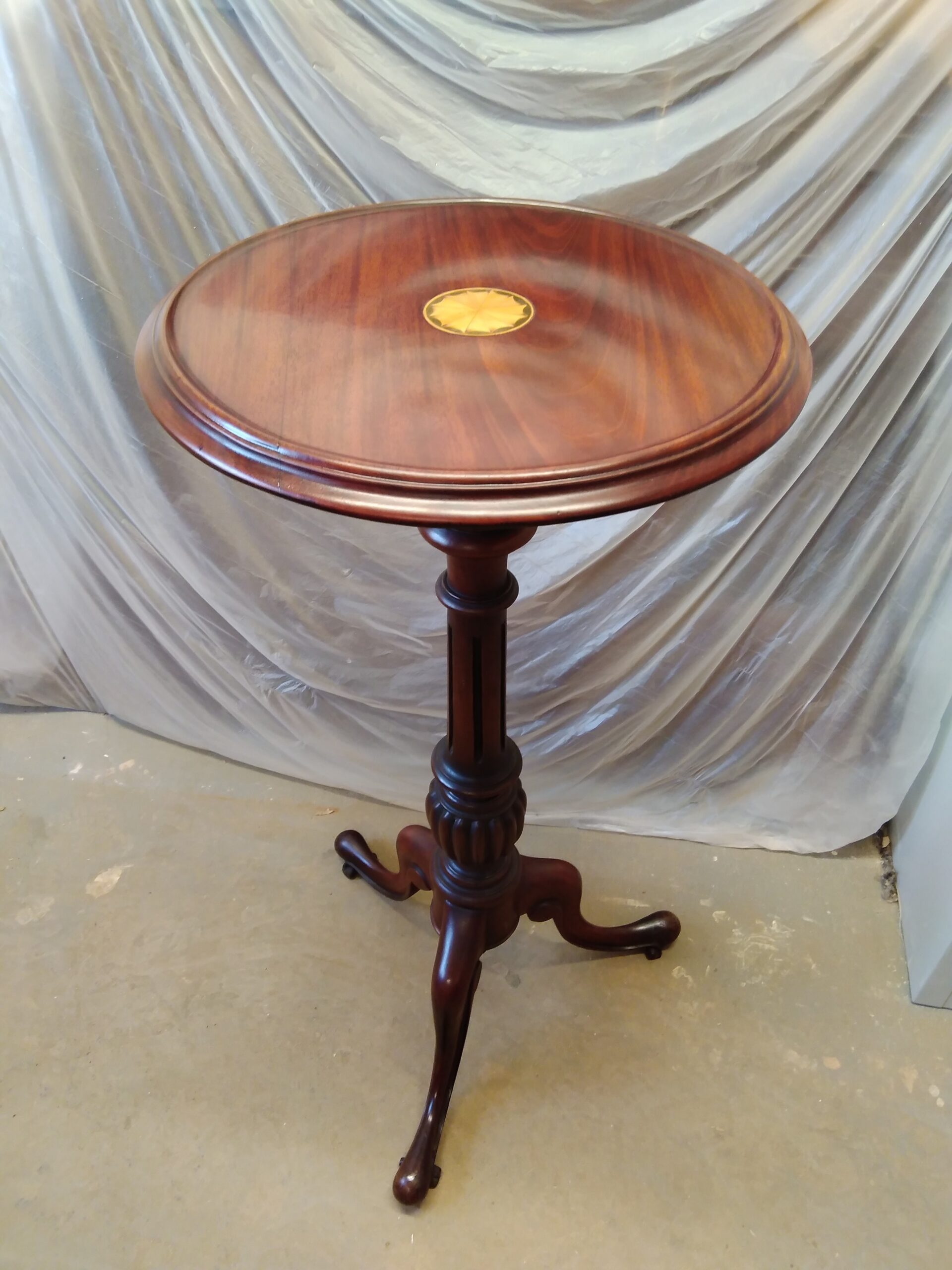
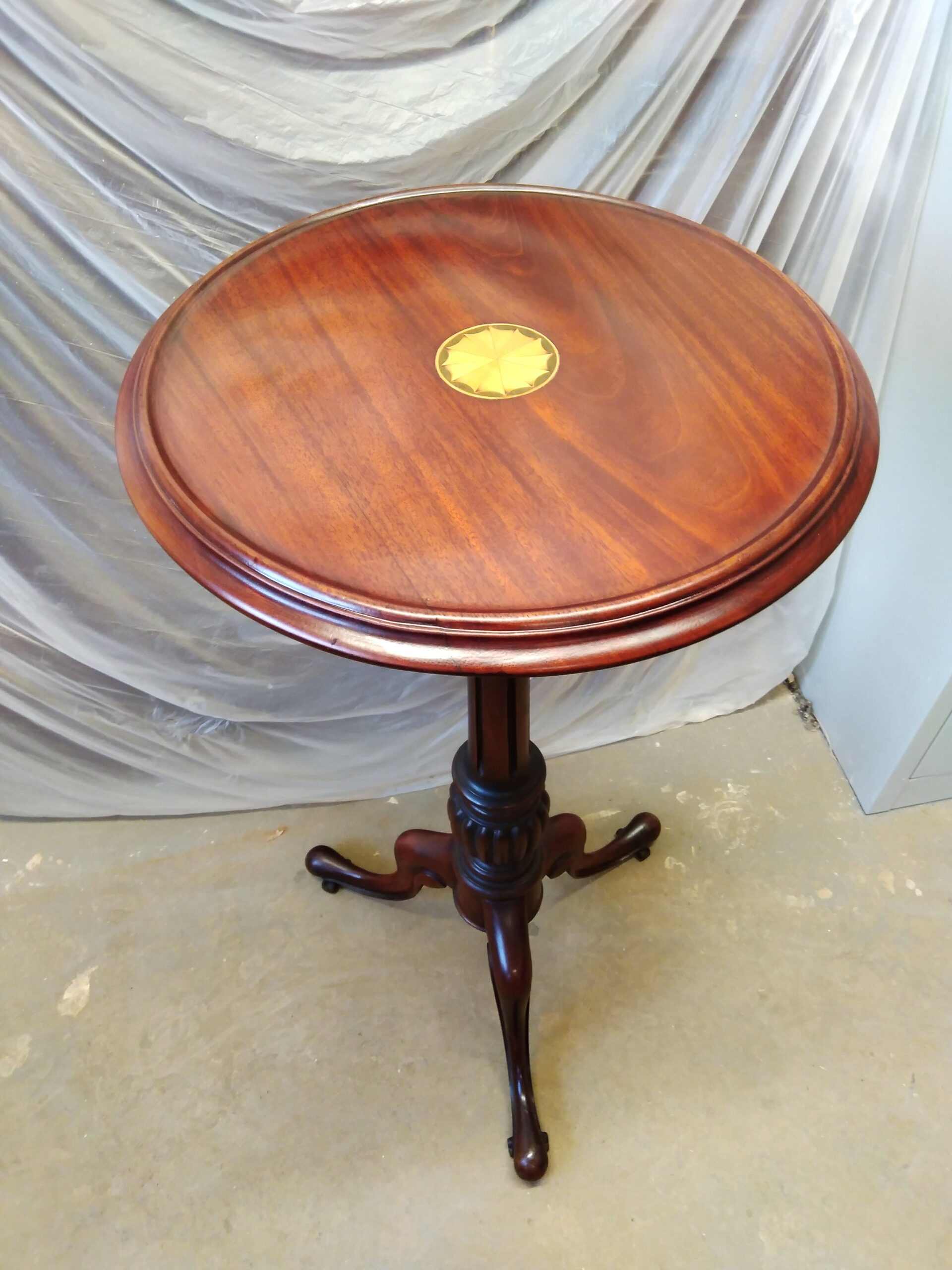
This beautiful early nineteenth-century occasional table arrived in very poor condition, with much of its original marquetry inlay missing and the top crudely nailed to the central column as part of an earlier, low-quality repair. As a result, the table had lost not only its refined elegance but also its original adjustable function, which would once have made it both decorative and practical. Originally, the table would have featured two or more graduated tiers fitted onto a threaded central spigot, allowing the height to be altered with ease to suit different uses within the home. Despite the damage, the quality of the mahogany and cherry structure and the surviving craftsmanship still clearly reflected its early nineteenth-century origins and potential for restoration.
Structural repairs and new spigot
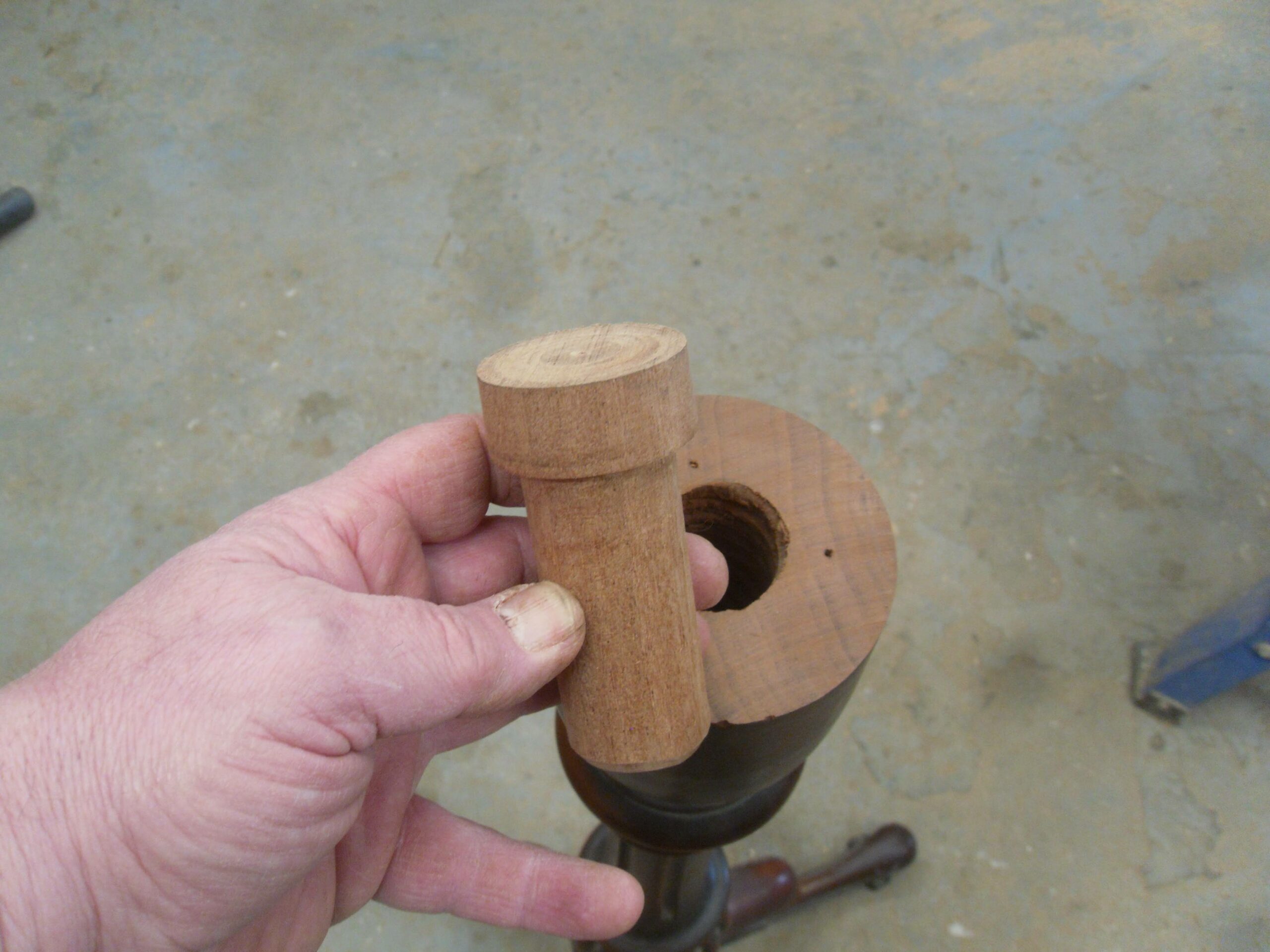
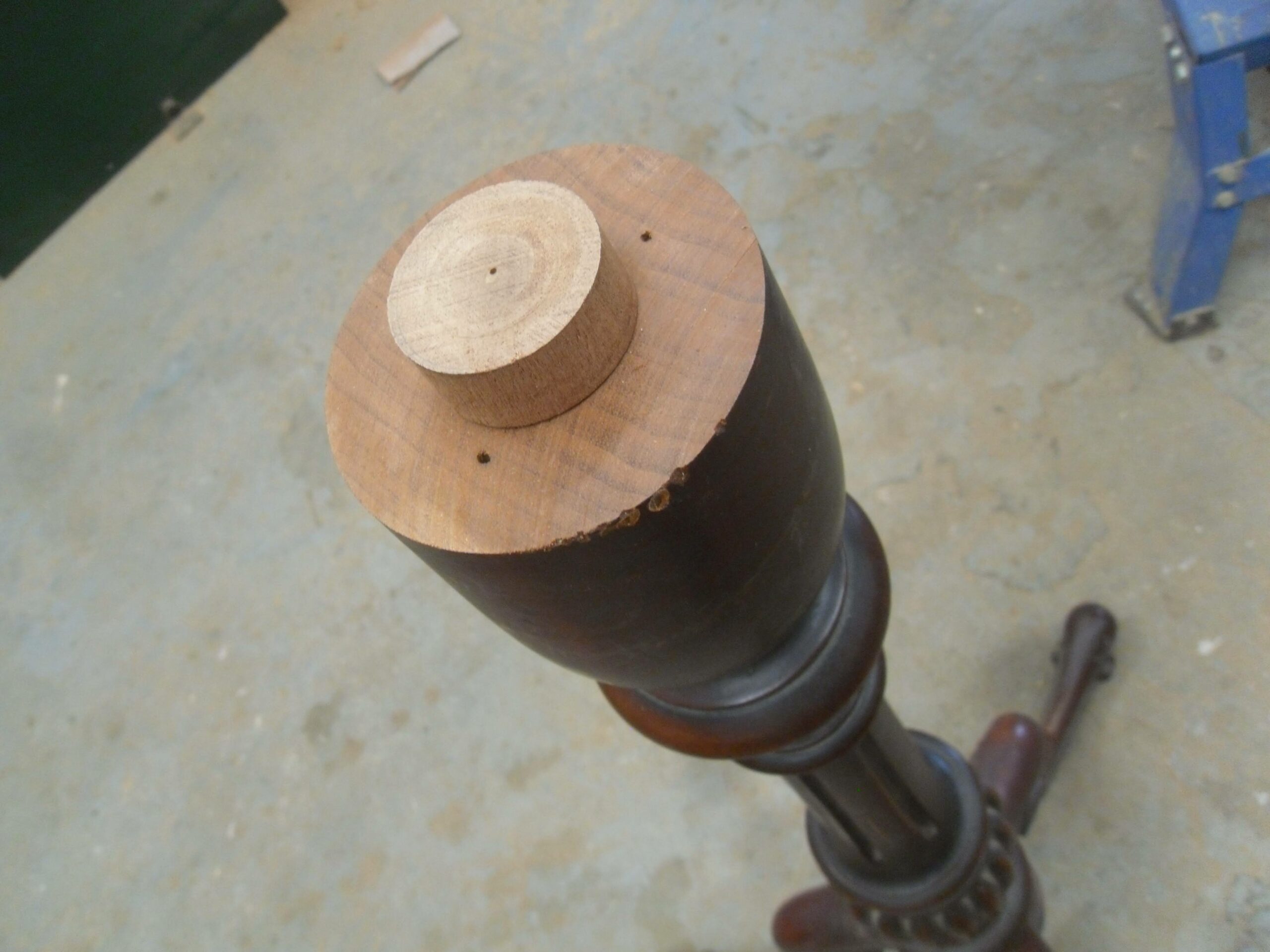
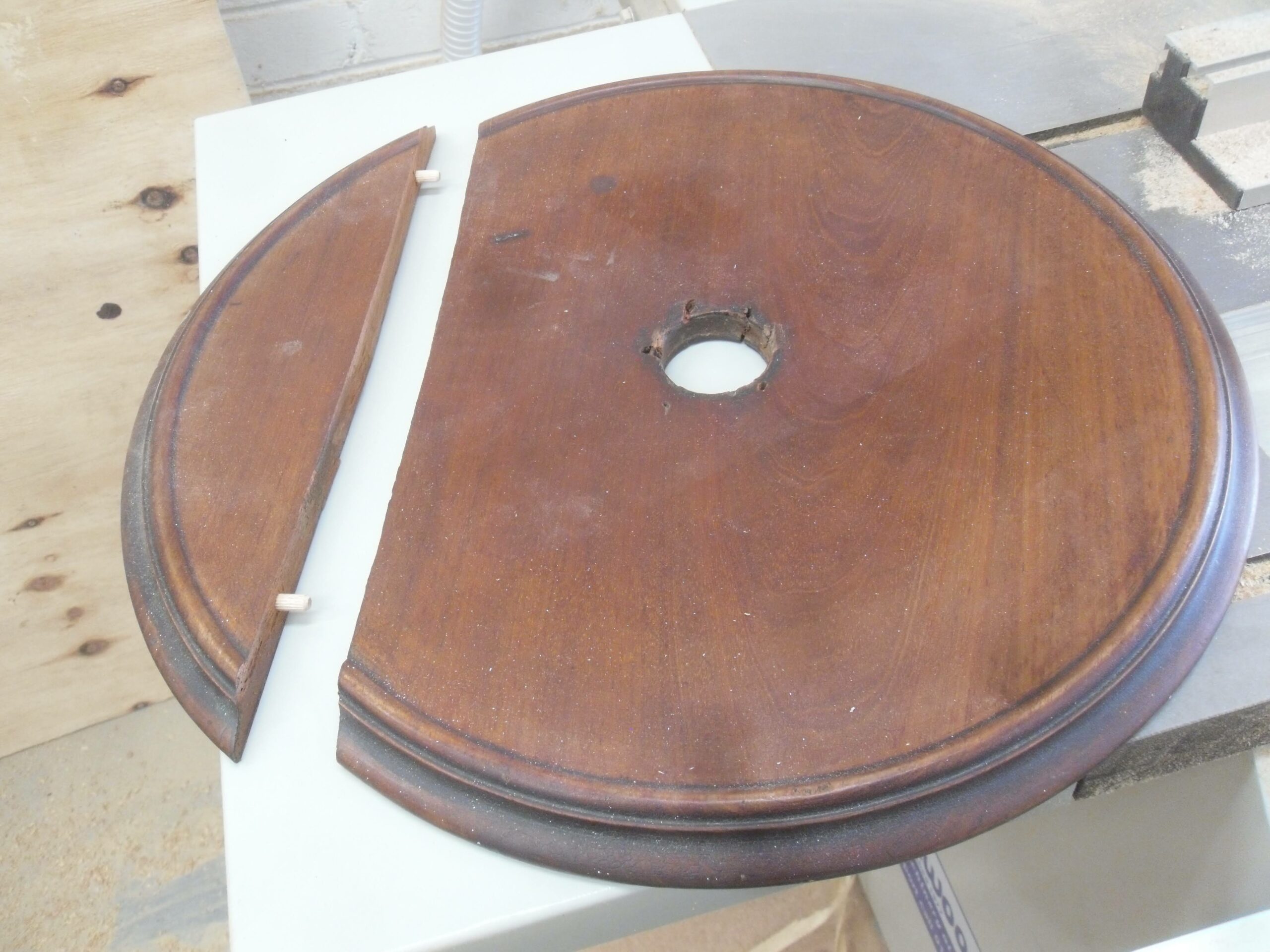
To restore the table’s original function, a brand new central spigot was carefully turned by hand and precisely fitted, allowing the top to be securely reconnected to the pedestal as it would have been originally. This critical structural repair returned the table’s adjustable mechanism and ensured the correct alignment of all components. The cracked tabletop was then reglued with great care and further strengthened with discreet dowel reinforcements, providing the necessary long-term stability while preserving the integrity of the original timber.
Marquetry preparation and fitting
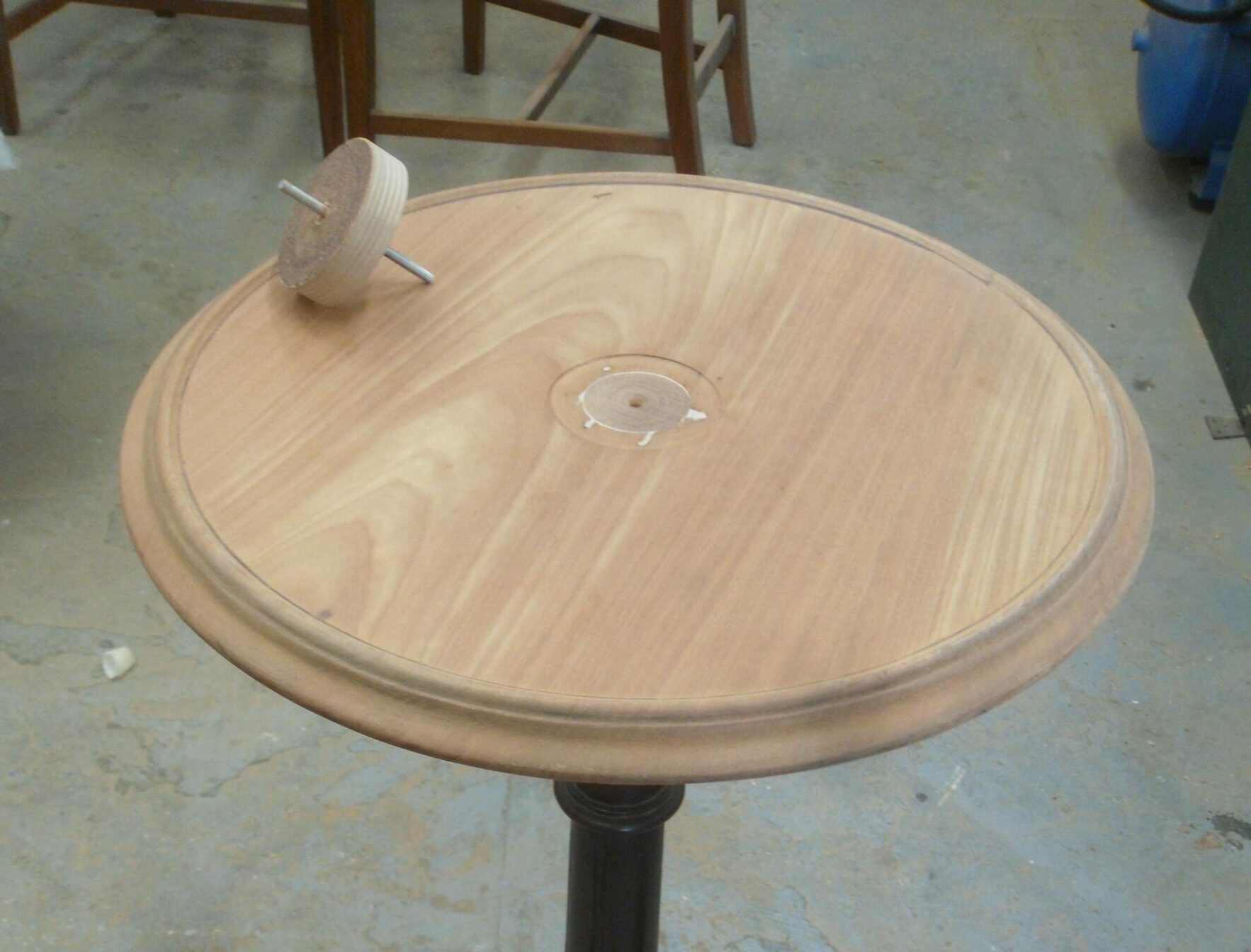
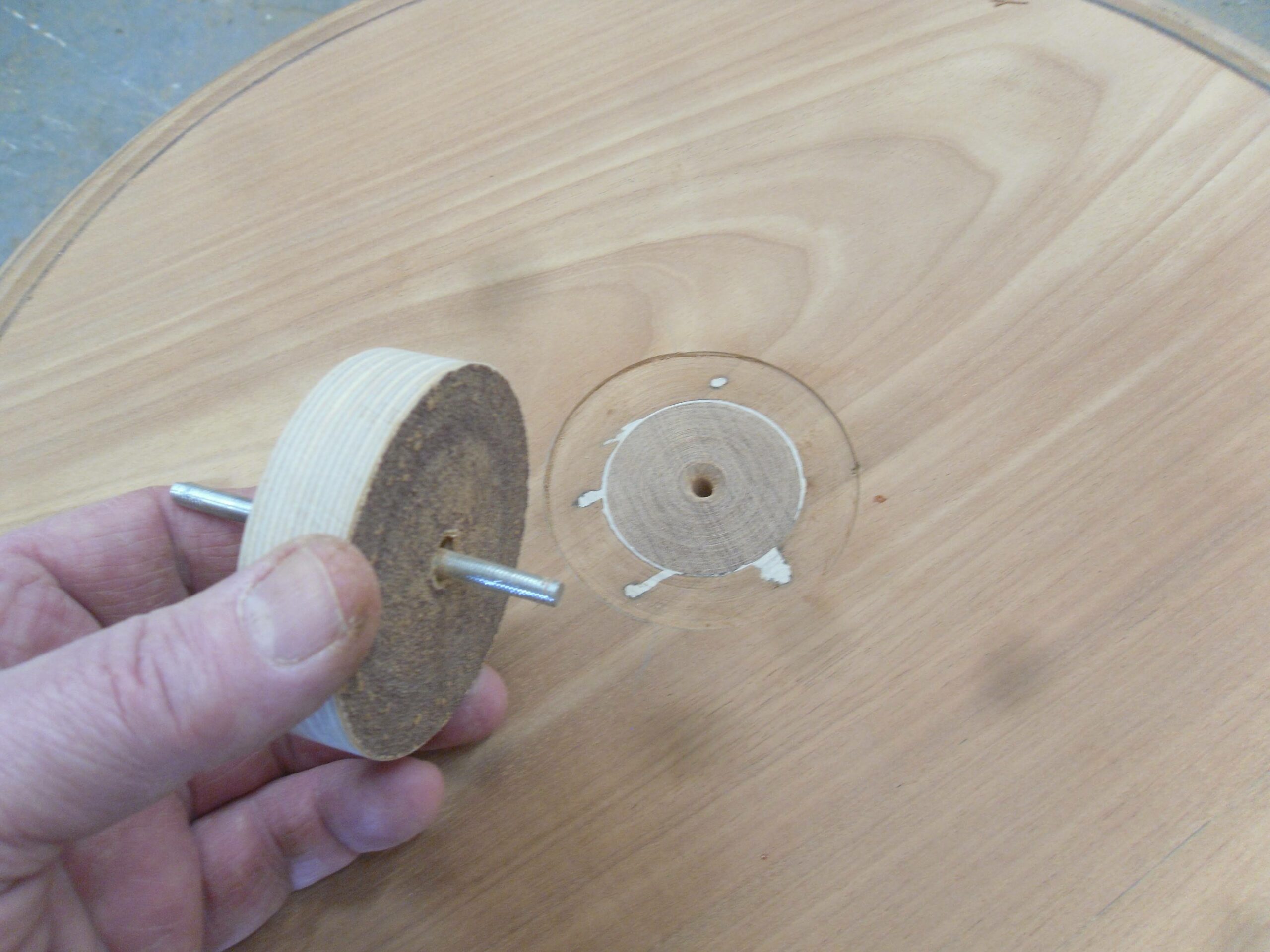
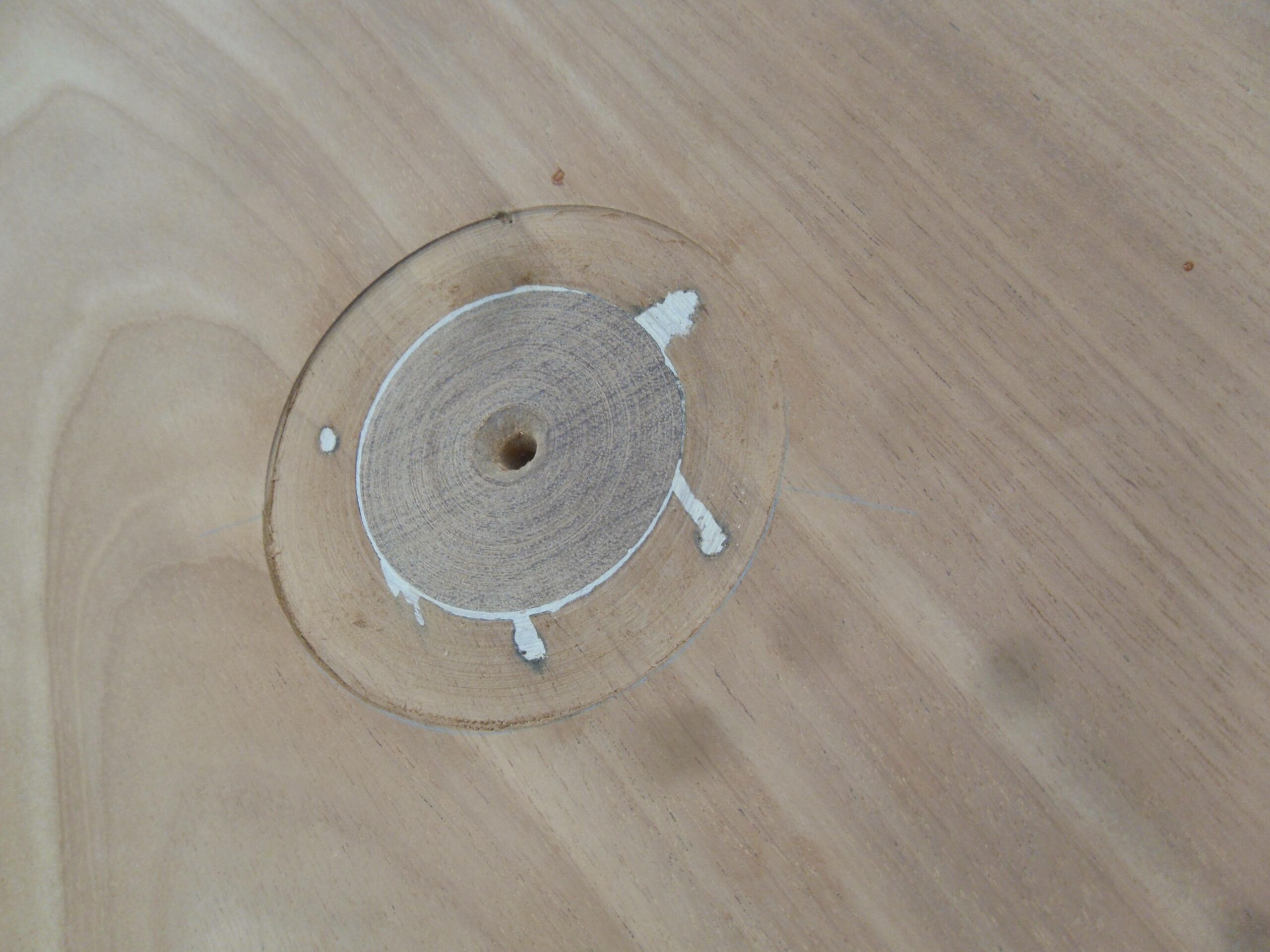
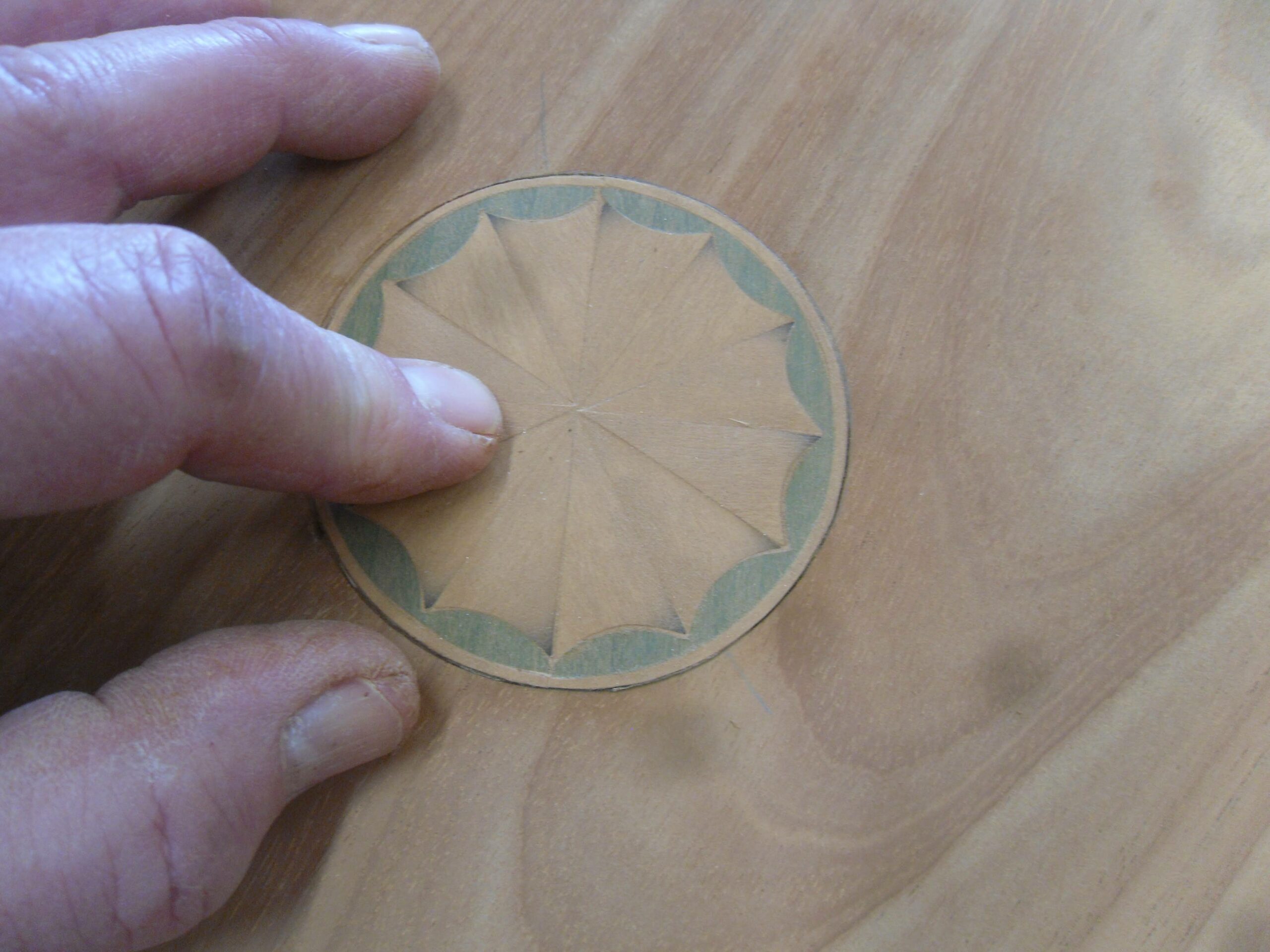
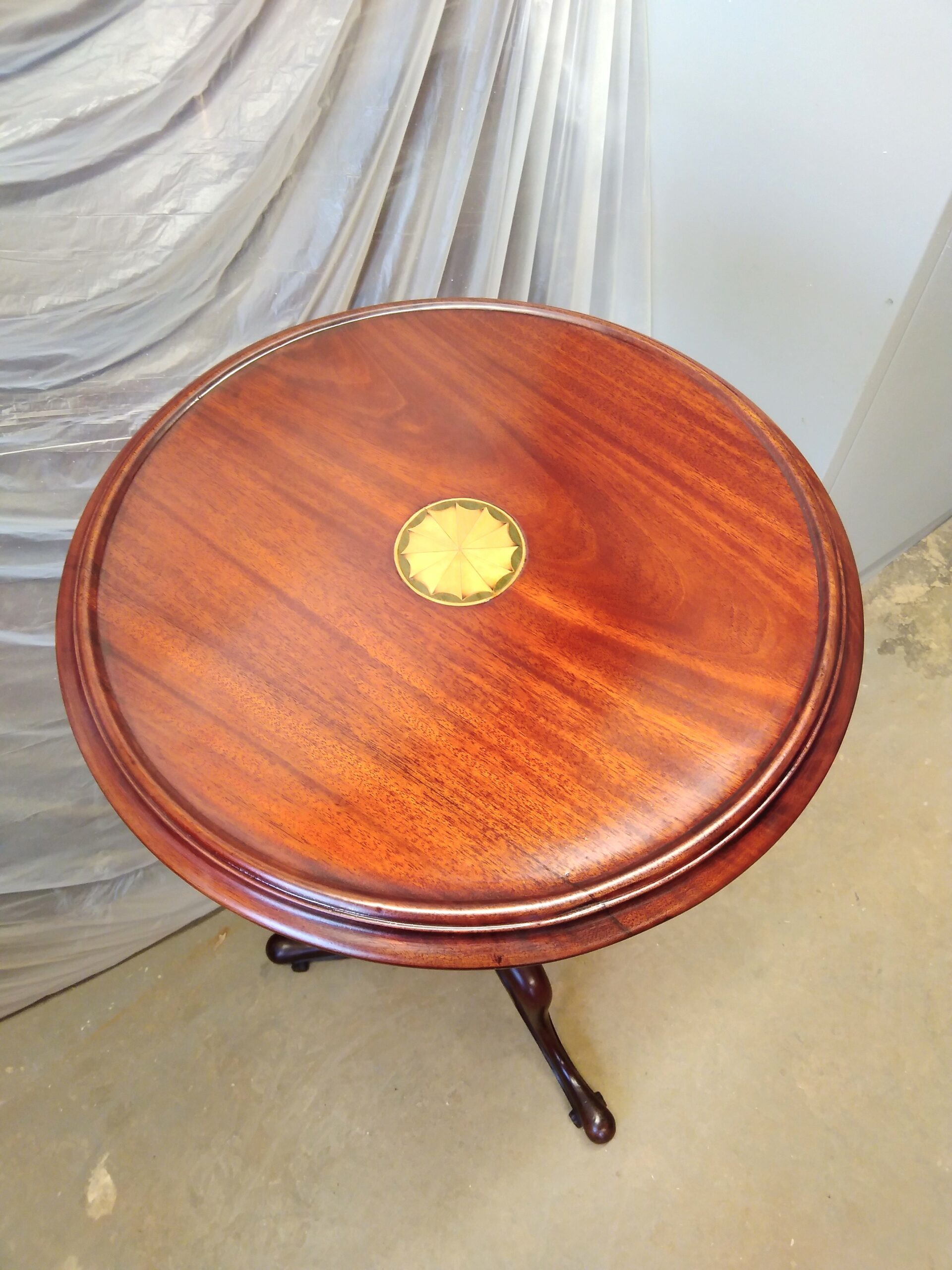
A shallow rebate was carefully cut into the centre of the tabletop to discreetly conceal the spigot repair while also creating a precise setting for a new marquetry decoration. To ensure a perfectly clean and even finish, a custom sanding tool was specially made to the exact diameter required, allowing the surface to be refined with accuracy and control. Once the preparation was complete, the new marquetry was meticulously glued into place, restoring the table’s decorative focal point and reintroducing the refined detail that would have originally defined its appearance.
Final preparation and finish
After further careful surface preparation, including fine sanding and final checks to ensure every repair blended seamlessly, the table was made fully ready for refinishing and polishing. These final stages will enhance the natural beauty of the timber while protecting the surface for everyday use. As a result of this detailed restoration process, the early nineteenth-century occasional table has now regained its character, functionality, and refined decorative presence, allowing it to be appreciated once more as both a practical and elegant piece.
Be sure to explore our work on our Facebook and Instagram pages, and don’t forget to follow us for updates, new projects, and more examples of our craftsmanship and restorations.