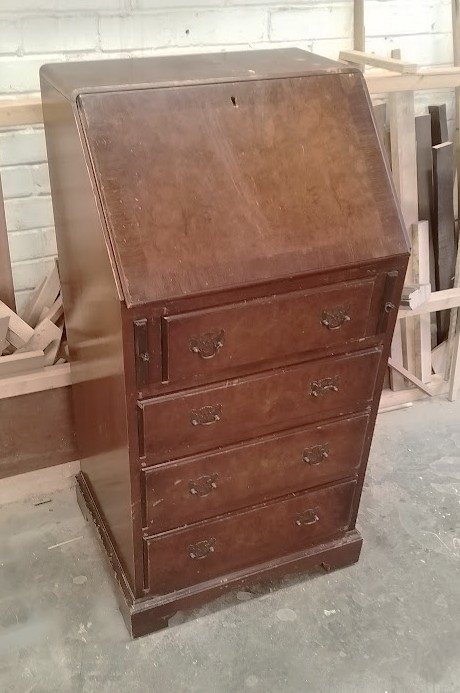
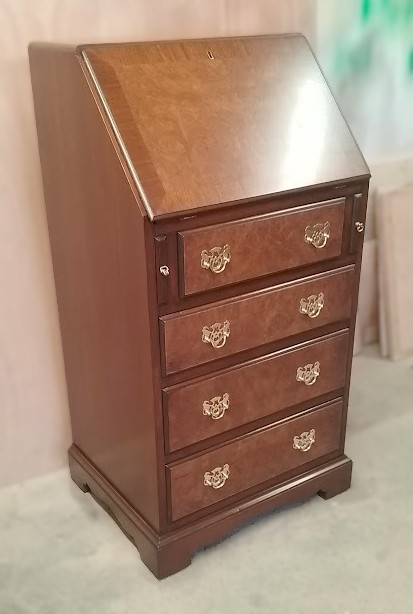
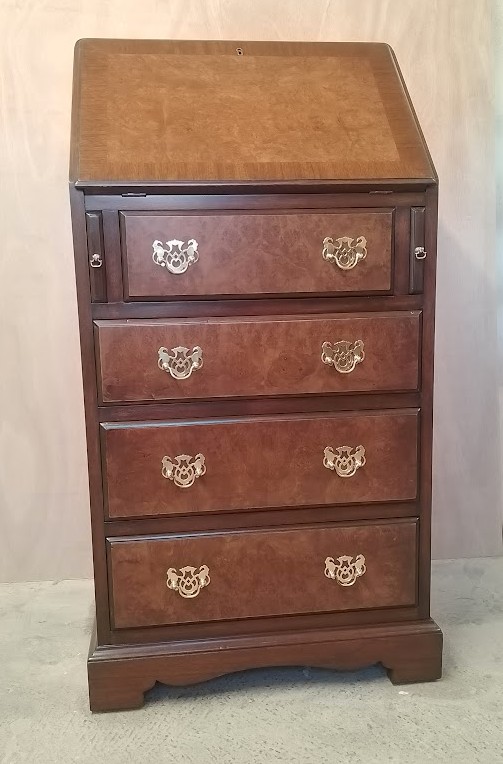
This charming bureau, veneered in burr walnut and sapele, came into our workshop looking tired and unstable after years of use. The finish had faded badly and parts of the interior had become loose.
Our goal was to stabilise the structure and restore the warmth of the veneers while keeping the character of the piece. The project involved careful dismantling, structural repairs and a full refinishing to bring the bureau back to life.
Original condition
When this bureau arrived, the finish had become patchy and faded from years of exposure to light. The original colour of the veneers was no longer visible, and the surface looked dull and uneven.
There were also structural problems. The pigeonholes inside the bureau had become wobbly, and the original construction relied on small panel pins that had loosened over time. Minor knocks and surface wear were visible across the piece, especially on areas that had been frequently used.
Although the damage was not severe, the bureau needed both structural attention and a complete refinishing to bring it back to its original character.
The restoration journey
We started by stripping the old finish from the exterior surfaces. This revealed the natural beauty of the burr walnut and sapele veneers underneath and allowed us to assess the condition of the wood more accurately.
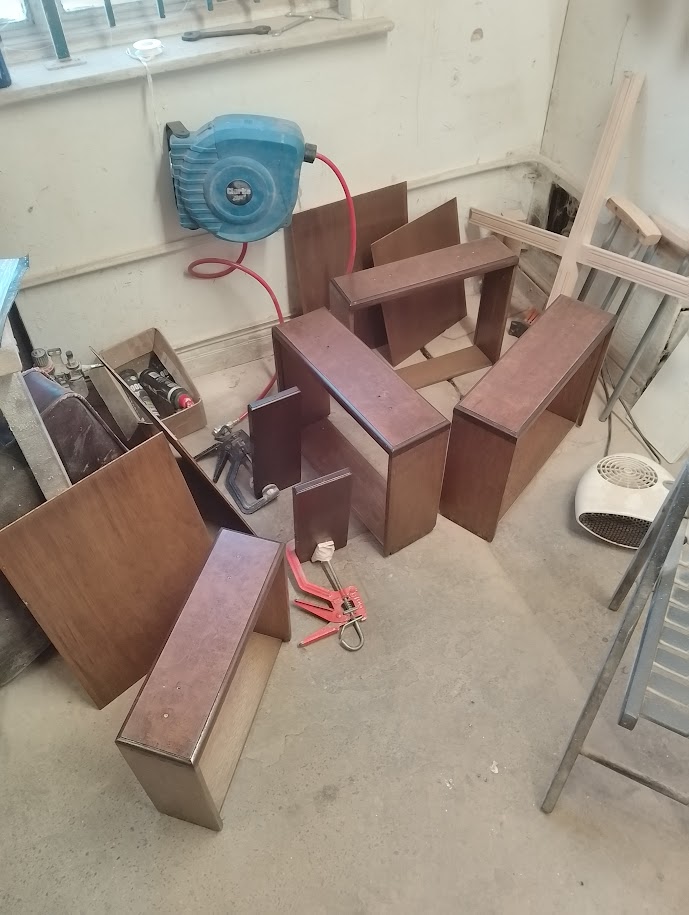
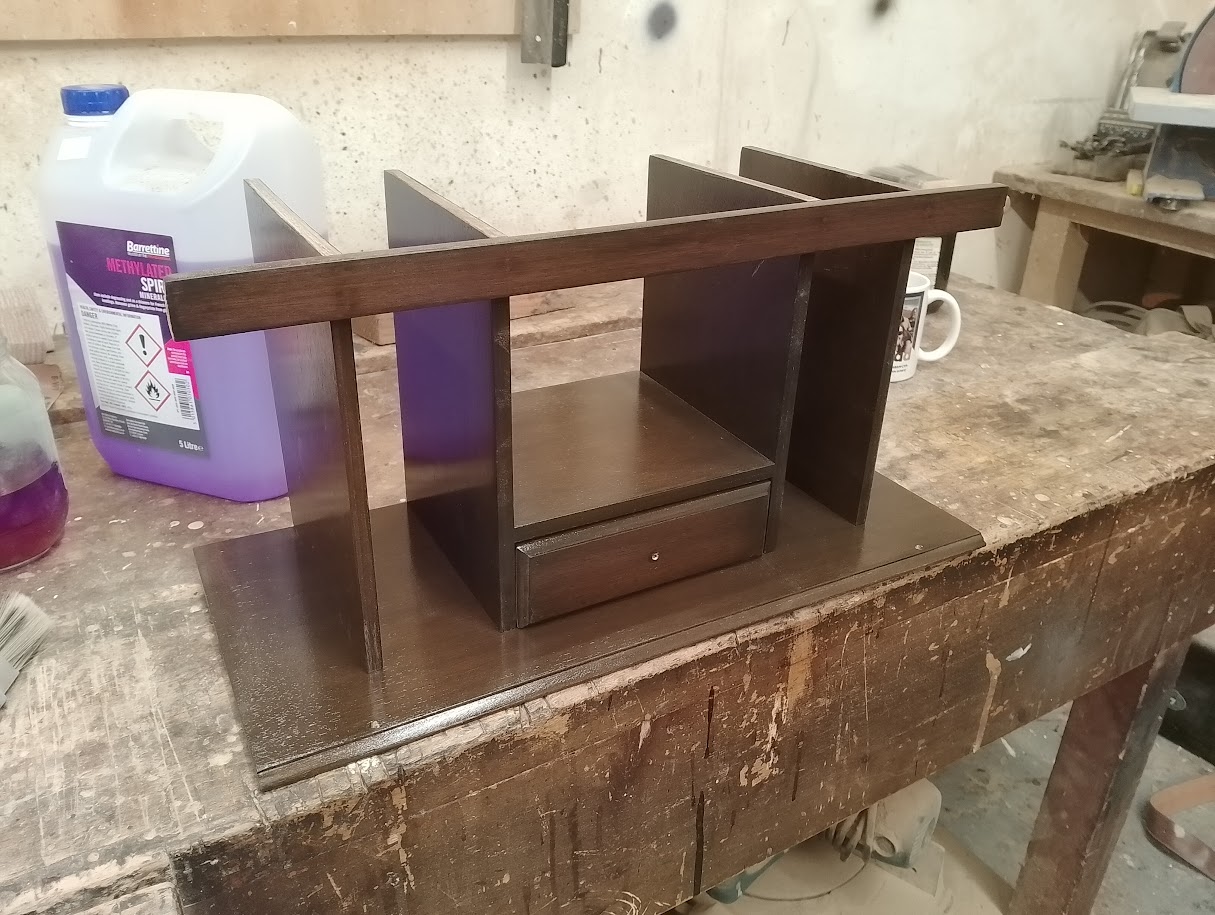
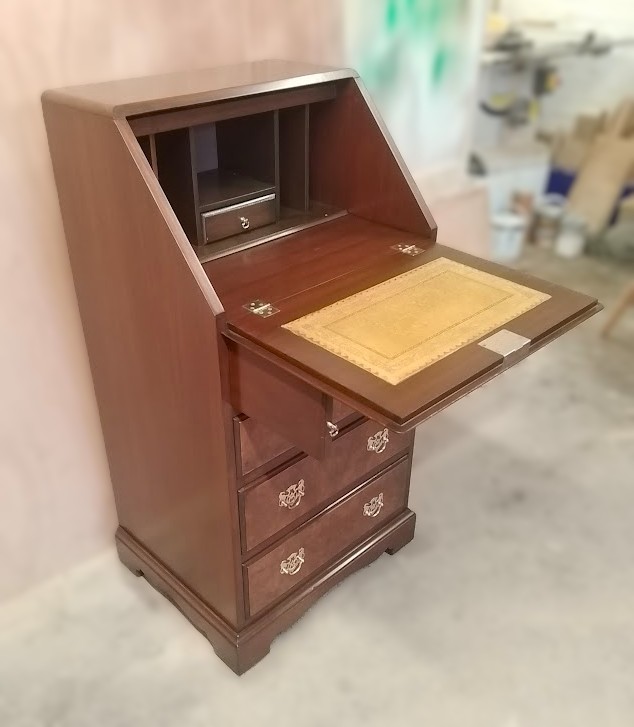
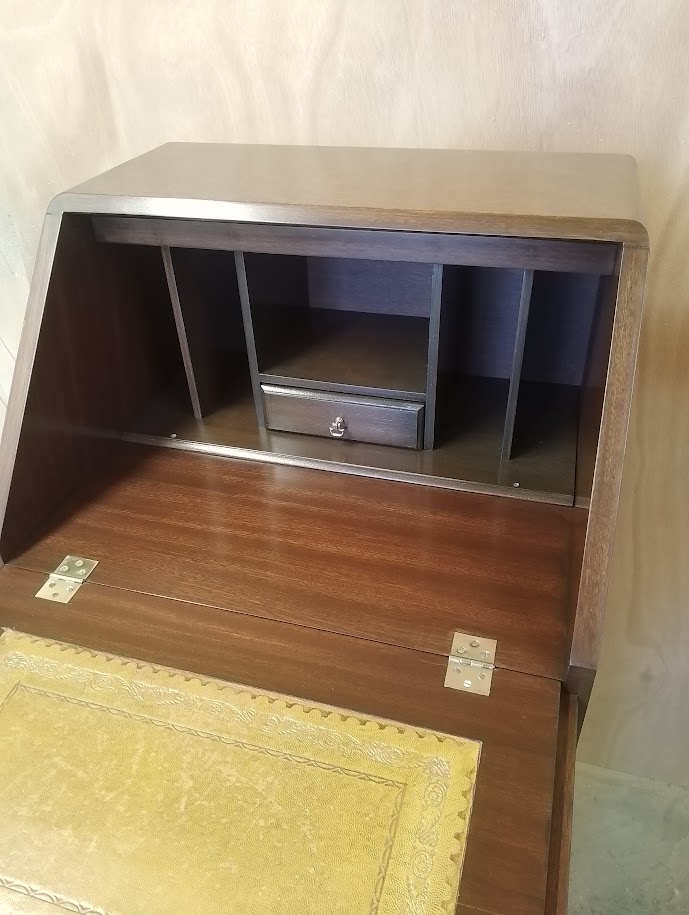
Next, we dismantled as much of the carcass and the drawers as possible. This made it easier to carry out proper repairs and stabilise the structure. The pigeonholes were removed, stripped and refinished individually before being reassembled. Instead of the original panel pins, we used screws to secure them firmly and prevent future movement.
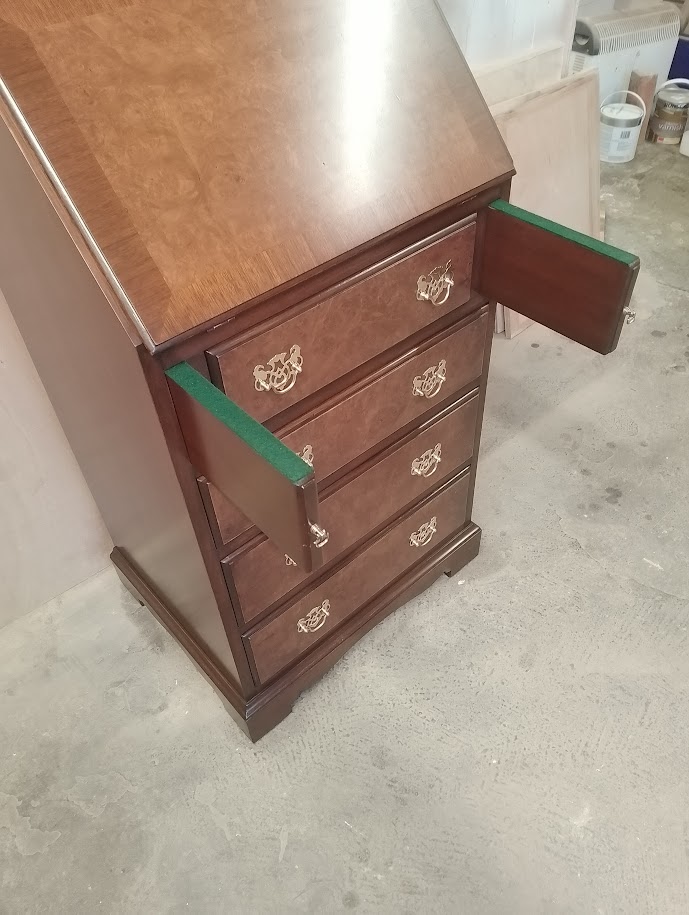
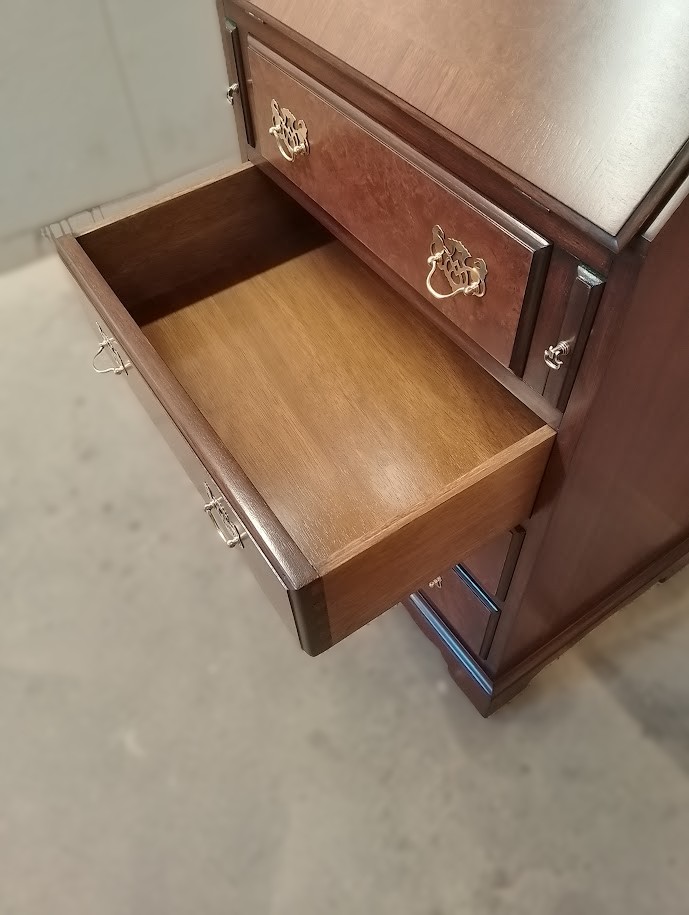
At the same time, we cleaned and sanded the drawer interiors and sides. The metal fittings were polished, and new felt was fitted to the lid supports to improve both function and appearance.
The finishing work
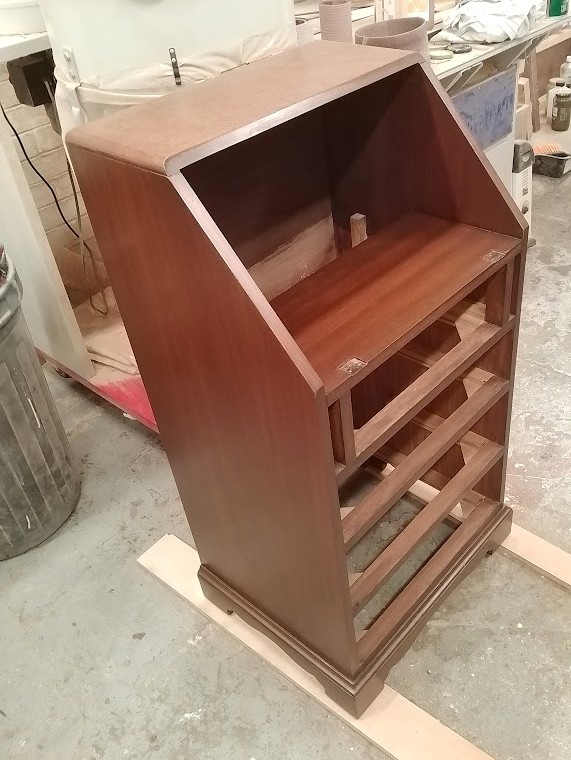
Once the repairs were complete, we applied a gel stain to restore the depth of colour lost through UV fading. This helped bring the burr walnut and sapele veneers back to life while maintaining a natural look.
To protect the surface, we applied four coats of satin lacquer. This created a durable finish with a soft sheen that suits the character of the piece.
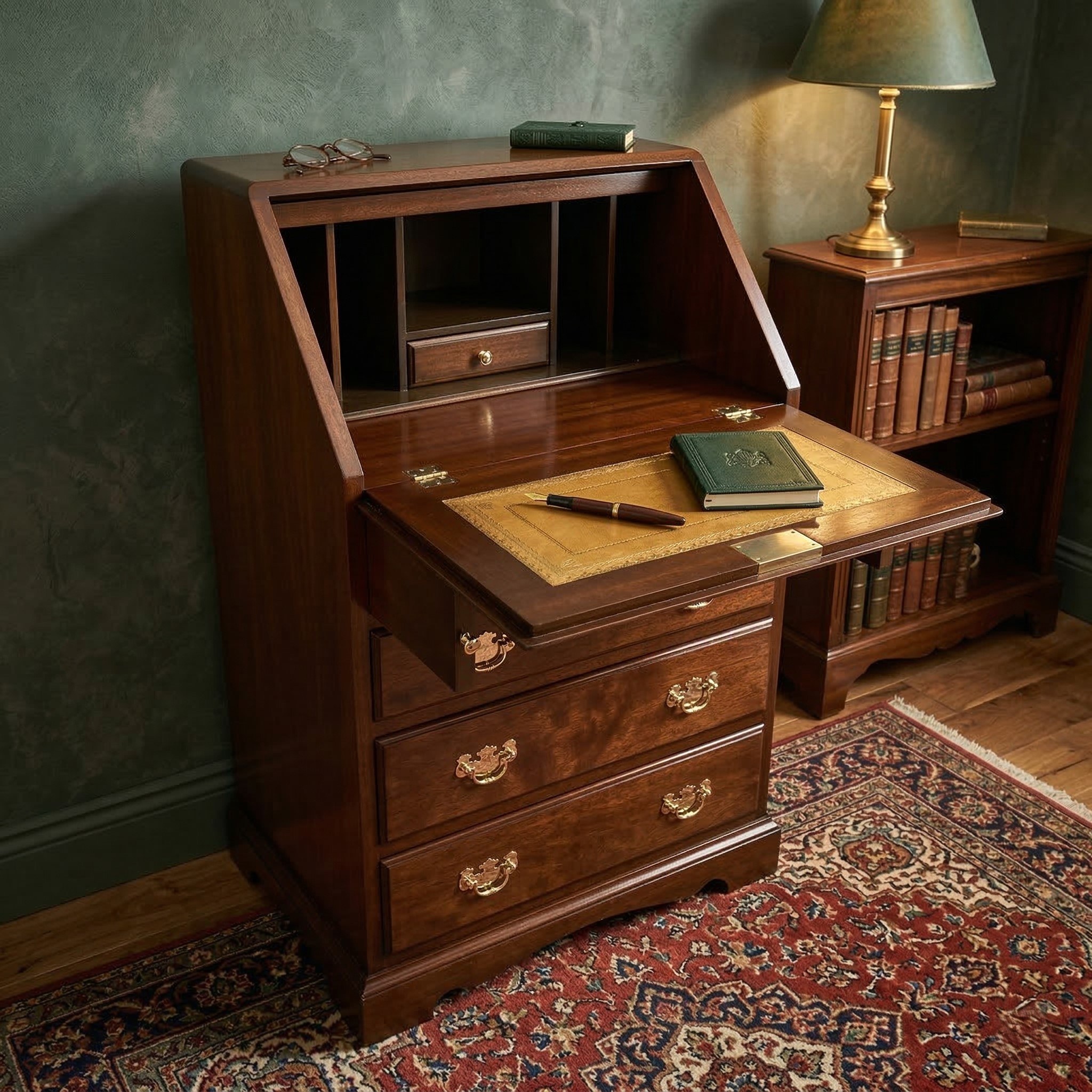
Finally, we reattached all the fittings and reassembled the bureau. The structure is now stable, the finish is even and warm, and the bureau is ready for many more years of use.
The wobbly pigeonholes were dismantled, stripped and refinished before being screwed back together in place of the original panel pins used in its construction
Draw interiors and sides are cleaned, sanded and refinished, metalwork polished and new felt fitted to the lid supports. Finally, four coats of satin lacquer before all fittings are reattached.
Be sure to explore our work on our Facebook and Instagram pages, and don’t forget to follow us for updates, new projects, and more examples of our craftsmanship and restorations.